At a glance
- Drive from Ålesund in about two hours with one ferry crossing, drive from Grotli in about 31 minutes, or take the Hellesylt car ferry, sailing 1 May to 15 December 2026.[22][28][29]
- All parking in Geiranger is paid from 1 April to the end of September, at hourly rates set per car park, by card, coin or the EasyPark app.[32][33]
- The car ferry sold by Fjord Tours links Hellesylt and Geiranger in 1 hour 5 minutes, from 390 NOK, from 1 May to 15 December 2026, passing the Seven Sisters waterfall.[22]
- The Langvatnet to Geiranger road and Trollstigen usually close from early November to late May. Check conditions before setting off in the shoulder months.[24]
- Geiranger Turbuss og Taxi runs a taxi service 24 hours a day, and a catamaran transfer from Hellesylt starts from US$42 one way.[34][37]
| North via Eagle Road | East via Grotli | Ferry from Hellesylt | |
|---|---|---|---|
| Road or route | Fv63 via Ørnevegen | Fv63 via Djupvatnet | Fjord Tours car ferry[22] |
| Landmark | 11 hairpin bends[41] | Djupvatnet, 1,038 m[24] | The Seven Sisters waterfall[22] |
| Time | About 2 hours from Ålesund[29] | About 31 minutes from Grotli[28] | 1 hr 5 min crossing[22] |
| On the way | Eidsdal to Linge ferry[29] | The Dalsnibba toll road start[36] | The Bridal Veil waterfall[21] |
| Recommended for | Drivers coming via Ålesund | Arrivals from the east | Cars and foot passengers[22] |
Ørnevegen is the name of the eleven hairpin bends that ascend the steep, verdant hillside from Geiranger towards Eidsdal.
Which way into Geiranger
Before you set off
Driving to Geiranger from Ålesund
The most direct route from Ålesund to Geiranger covers roughly 60 km and takes about 90 minutes by car. Head southeast from Ålesund on Route 6, then follow Route 63 toward Geiranger. The road is well-maintained and clearly signposted, winding through mountain scenery as you climb toward the fjord. This approach gives you a leisurely drive through Norwegian valleys before you arrive at the village, allowing time to orient yourself and find parking before your tour departure.
Once you reach Geiranger village, the landscape opens dramatically. The fjord spreads below with steep mountainsides rising on either side. If you are driving yourself, allow extra time to locate your meeting point and secure a parking spot near the coach pickup location. The village can be busy during summer months, so arriving 20 to 30 minutes early is wise. Local signage will guide you toward the tour operator's assembly point.
Reaching the fjord by car from Ålesund covers about 108 km and takes around two hours, using the E136 and the Fv650 and the Eidsdal to Linge ferry across the Storfjord.[29] That ferry is a separate crossing from the Hellesylt to Geiranger ferry, and a driver on this route needs only the one.
The Hellesylt Car Ferry Crossing
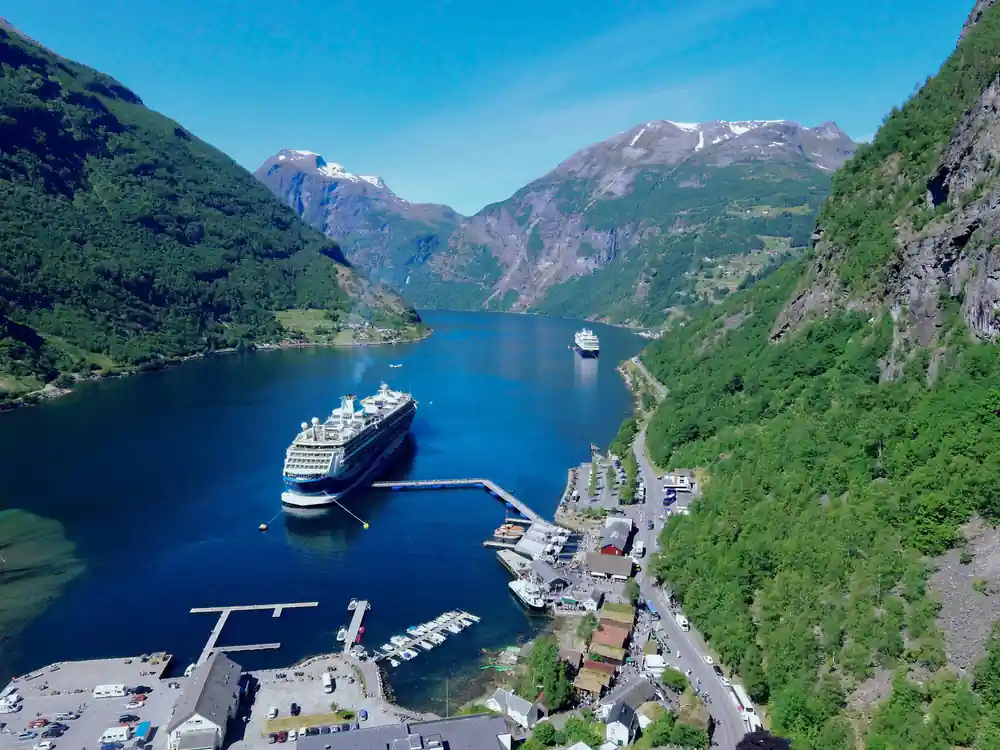
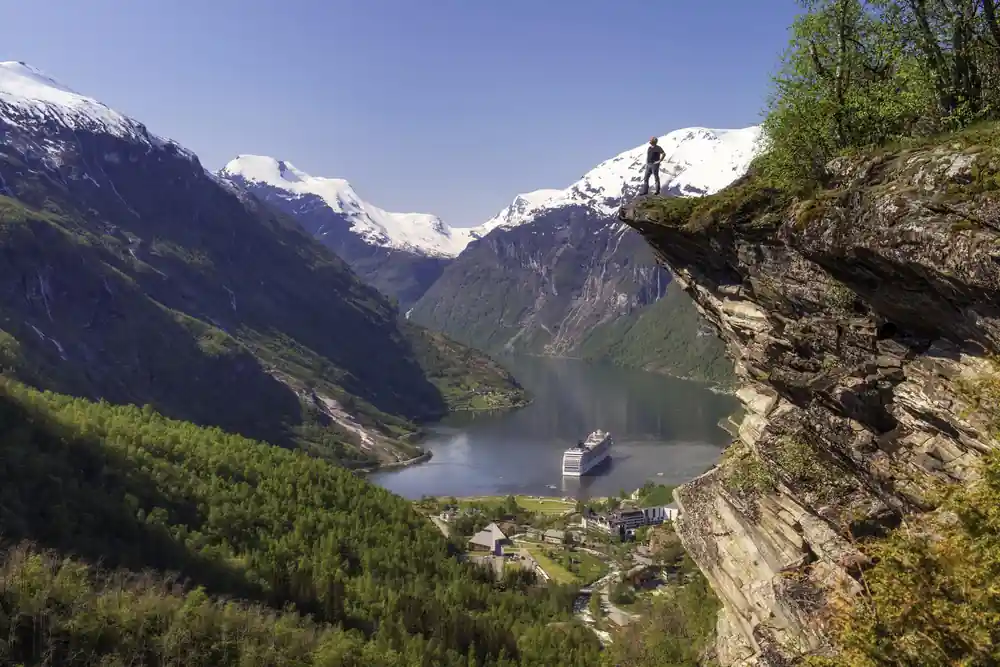
An alternative approach is to use the car ferry that connects Hellesylt to Geiranger across the fjord. This scenic crossing takes about 1 hour 5 minutes and lets you experience the Geiranger car ferry whilst transporting your vehicle. Hellesylt sits to the west, accessible via Route 9 from the E6 highway. The ferry dock is straightforward to reach, and the crossing itself is memorable, with sheer cliff walls framing the waterway on both sides.
The Geiranger ferry does not run year-round: in 2026 the car ferry sold by Fjord Tours sails from 1 May to 15 December. Check the current timetable before you travel, as frequency varies by season and weather conditions occasionally cause disruptions. On arrival at Geiranger's eastern dock, you are just minutes from the village center and tour meeting points. This route is practical if you are coming from the north or west, and it cuts driving time compared to the overland route via Ålesund.
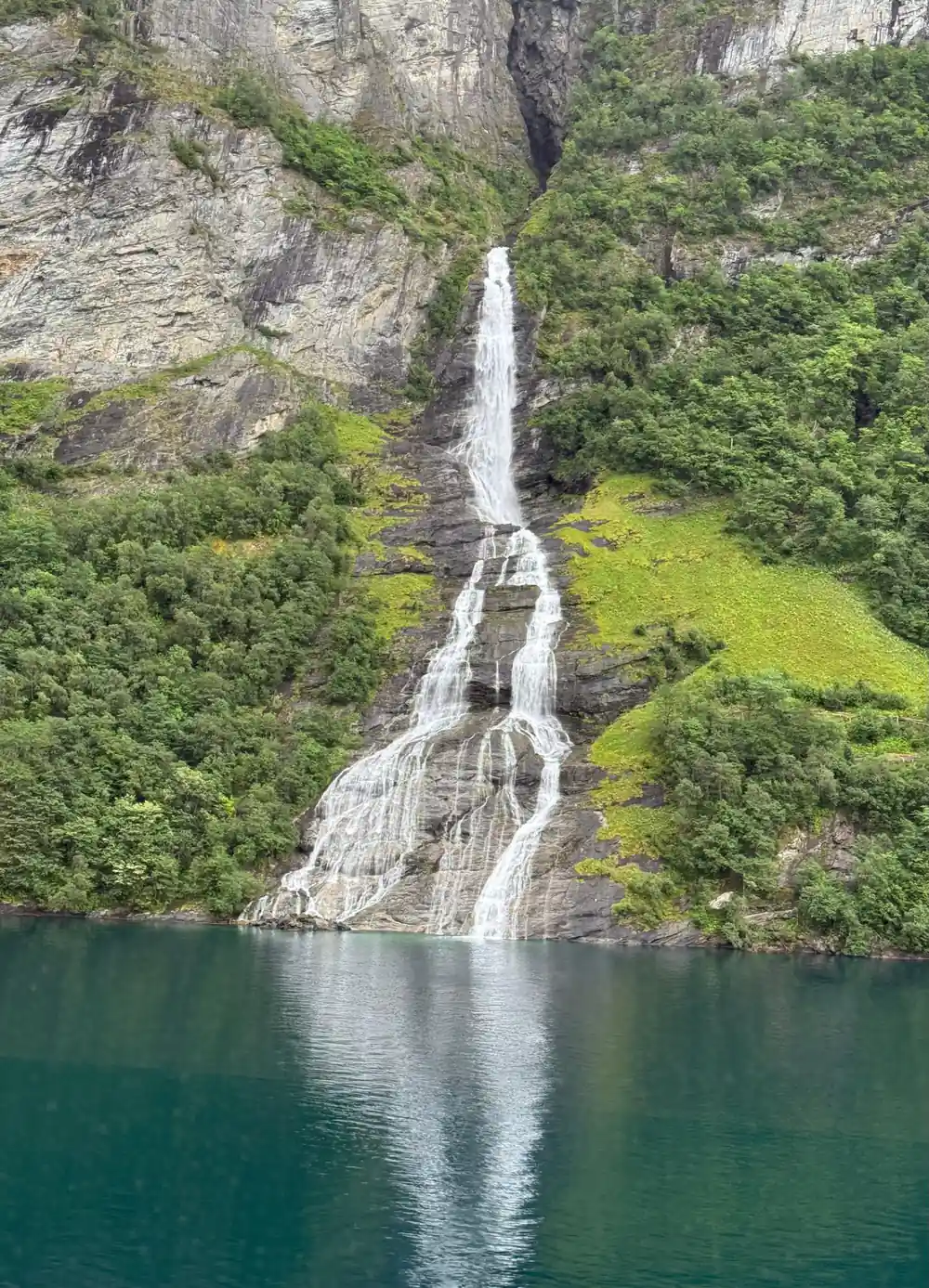
Fjord1, which advertises its Geiranger to Hellesylt car ferry from April to October, cancelled the route for the rest of the 2026 season.[21] The crossing still runs on the car ferry sold by Fjord Tours: 1 hour 5 minutes, from 390 NOK, with a 2026 season from 1 May to 15 December, past the Seven Sisters waterfall.[22]
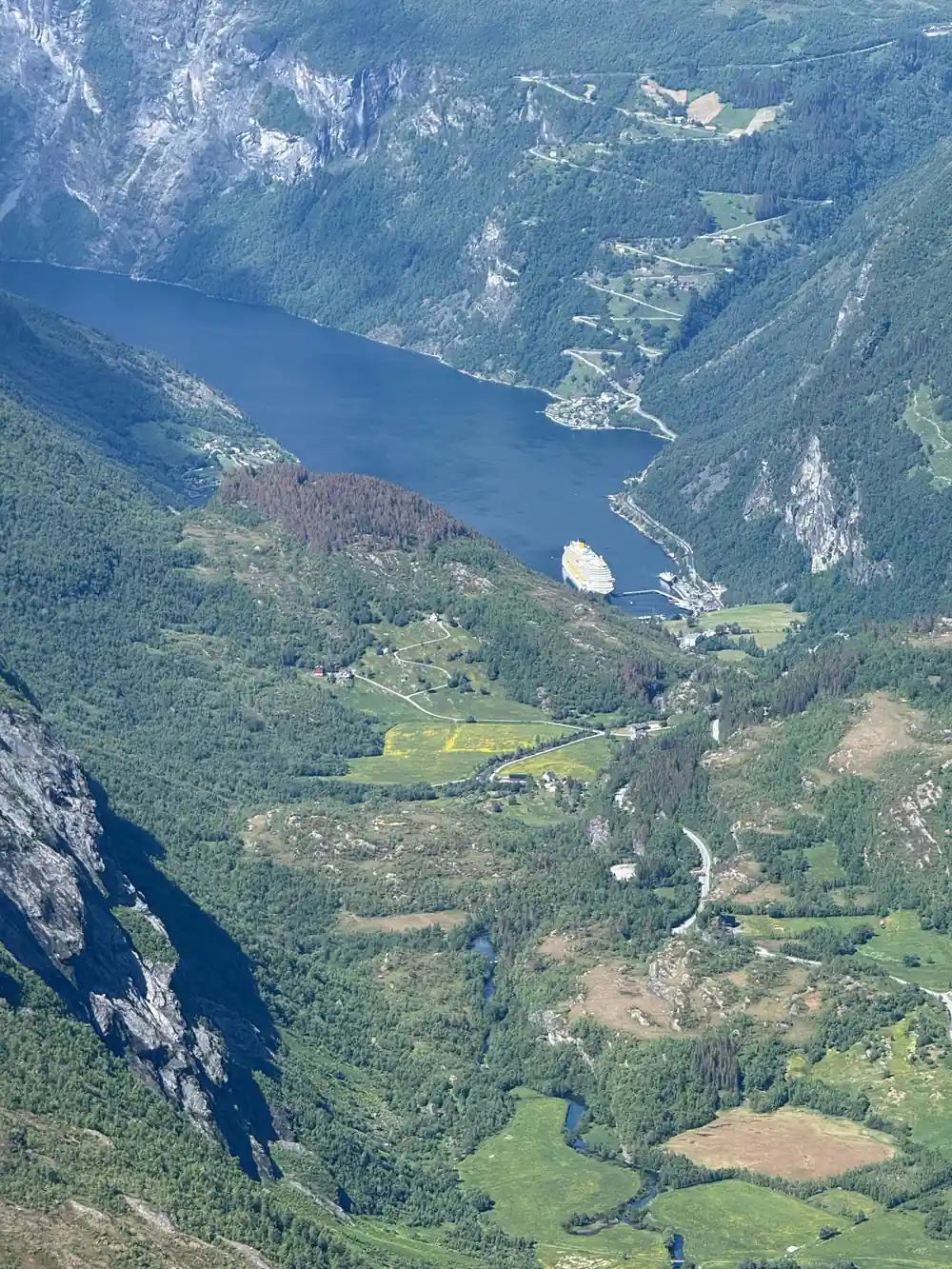
The Hellesylt ferry delivers you straight to Geiranger's doorstep
How Motor Traffic Reached Geiranger in the First Place
The road and ferry network you will use was built by people with a commercial interest in your arriving. In May 1913 the Ørebladet reported that seven hotel owners from inner Nordfjord and Geiranger had just founded a motor company running Geiranger to Nordfjord to Otta [1]. Not a public authority and not a transport firm: seven hoteliers, who needed guests to be able to get to their hotels.
The volumes that followed were counted. In August 1938 the Romsdalsposten reported that the car ferry Geiranger had by then carried more than two thousand six hundred cars [2], a figure printed because it was notable.
Both notices are useful background to a modern crossing. The ferries and mountain roads here exist because tourism paid for them, and they have been carrying visitors for well over a century.
The Eagle Road: A Demanding Mountain Descent
The Eagle Road, or Ornsvingen, is the famous hairpin-bend descent into Geiranger from the north. Thirteen sharp switchbacks drop you roughly 600 meters in just 11 km. The road is narrow, steep, and requires confident driving, particularly in wet or icy conditions. Vehicles towing caravans or trailers face restrictions, and large motorhomes are discouraged. If you are an inexperienced mountain driver or prefer to avoid this challenge, the Ålesund route or the ferry option is preferable.
Ørnevegen, the road through the mountain pass between Eidsdal and Geiranger, was officially opened on 15 September 1955,[42] and from Eidsdal a ferry crossing of about 10 minutes connects to Linge.[36] On County Road 63 it is the Langvatnet to Geiranger section and the Trollstigen section that usually close in winter, from early November to late May.[24]
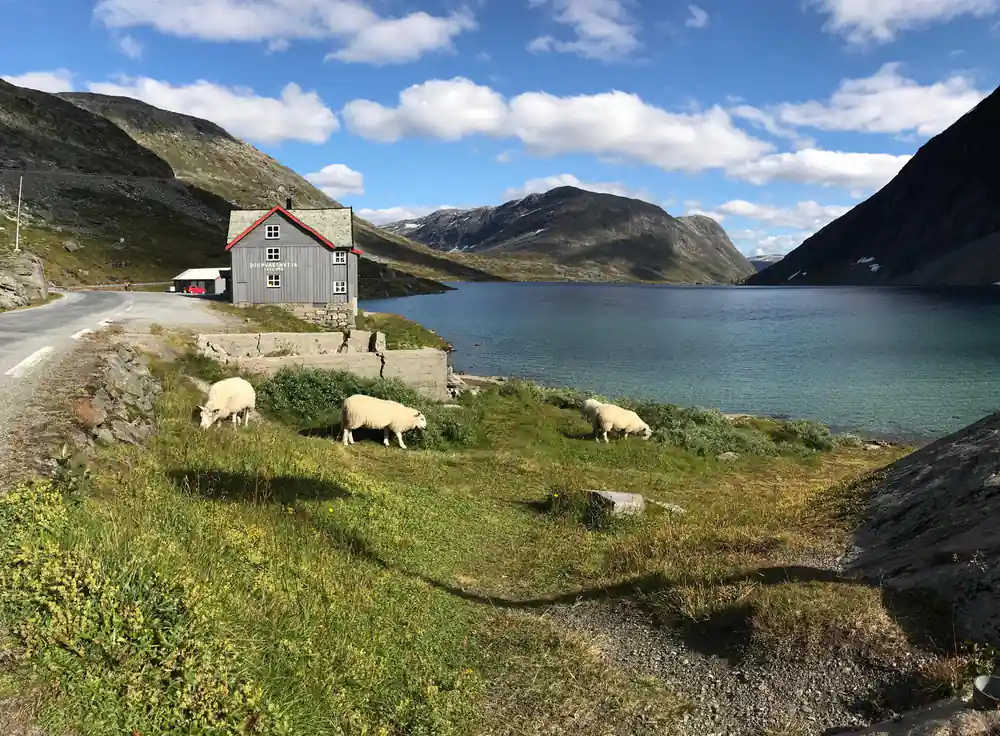
Dalsnibba, 1,476 metres above sea level, is reached by the private Nibbevegen toll road, which leaves County Road 63 about 21 km from Geiranger.[35] The toll road starts at Djupvatnet, the highest point of the public road, so it lies on the opposite side of Geiranger from Ørnevegen.[24][36]
1955
Ørnevegen, officially opened on 15 September 1955, climbs from Geiranger towards Eidsdal in eleven hairpin bends.[42][41]
Long-Distance Connections and Coach Services
Travelers arriving from Bergen or Oslo can reach Geiranger by a combination of coach services and regional buses. Direct coach routes do not serve Geiranger itself, but long-distance operators run buses to nearby towns like Ålesund, Lillehammer, and Trondheim. From these hubs, local or regional bus connections can take you onward to Geiranger village. Journey times from Oslo can exceed 12 hours depending on connections, and from Bergen around 8 to 10 hours. Book these connections in advance, especially in summer.
The nearest Geirangerfjord airport is Ålesund Airport Vigra, approximately 60 km northwest. Most international flights arrive here. Bergen Airport and Oslo Gardermoen are larger hubs with more flight options, but both require a longer journey to Geiranger. Car rental at any airport is straightforward if you prefer independent travel. Once at your departure point, allow time for the drive to Geiranger before your scheduled tour start.
Oslo's rail journey does not reach Geiranger directly: the Rauma Line goes only as far as Åndalsnes, an hour and seventeen minutes beyond Dombås, where coordinating buses run on to Ålesund and Molde.[31] A traveller driving from Bergen can follow the E39 and the Oppedal to Lavik ferry, a road journey of about 370 km and roughly six and a half hours.[30]
Seasonal Road Closures and Winter Conditions
The Trollstigen mountain pass, a dramatic 180-turn road often photographed by visitors, closes seasonally. Typically it opens in May and closes again in October due to snow, though exact dates shift yearly based on weather. If you are planning a visit outside the summer months, check road status carefully. The Geiranger road closed warnings are published by Norwegian road authorities, and traveling during closure is not possible.
The Grotli road, another scenic route into the region, also closes seasonally. Winter driving in this area demands caution, snow tires, and chains. Even main routes like Route 6 can be affected by heavy snowfall, and visibility can drop sharply. If you are visiting between November and April, verify that your intended route is passable before setting out. Summer travel, roughly June through September, offers the most reliable road conditions and the full Geiranger map of attractions open.
In 2026 the Trollstigen road opened on 27 April at 12:00, which Visit Møre og Romsdal called a very early opening against a normal season that runs from mid-May to October or November.[26][27] On the other side of Geiranger, the drive between Geiranger and Grotli is about 37 km and takes about 31 minutes.[28]
Parking and Arrival Logistics
Geiranger village has limited but serviceable parking near the dock and village center. A paid car park sits close to the main streets where tour operators typically assemble groups. Parking costs are modest and payable by card or app. Arrive at least 20 minutes before your tour departure to locate the coach and confirm your booking. The village is small and navigable on foot, but parking spaces fill quickly in July and August, so do not leave this to chance.
All parking in Geiranger is paid parking, with the fee applying from 1 April to the end of September.[32][33] Rates are set per car park rather than at a single village-wide price, from 25 to 75 kroner an hour depending on the car park and the time of day, payable by card, coin or the EasyPark app.[33]
Where a car park lists a motorhome rate, it starts from 40 kroner an hour and sits above the car rate in the same car park. The machines take coins as well as cards for anyone who would rather not use the app, and payment is made at the start of parking.[33]
Taxis and Alternative Transport in the Village
Taxi services operate in Geiranger, though availability can be limited, especially outside peak season. Booking in advance through your hotel or local tourism information is advisable if you need a transfer to or from your tour meeting point. Ride-hailing apps have limited reach in this remote location. Walking the village is feasible if you allow extra time; most attractions and facilities are within a 10 to 15 minute walk of the waterfront. Local bus services are minimal, so private transport or taxis are the practical options for anything beyond the village center.
Geiranger Turbuss og Taxi runs a taxi service 24 hours a day: call the driver on duty for a ride, or pre-book a taxi by email.[34] A traveller without a car can also reach the village on a booked catamaran transfer from Hellesylt or on a boat and bus trip from Ålesund.[37][38]
A traveller who books ahead has ticketed options. A one way catamaran transfer from Hellesylt starts from US$42 and a one way boat and bus trip from Ålesund to Geiranger from US$106.[37][38] A 10.5-hour round trip from Ålesund, out by boat through Hellesylt to Geiranger and back by bus over Ørnesvingen and the Eidsdal ferry, starts from US$210.[39]
Driving distance into Geiranger
Road distances to Geiranger village; the Ålesund and Bergen routes each include a ferry crossing.[28][29][30]
What a transfer into Geiranger costs
Each figure is a transfer operator's own "from" price for one adult; child fares may differ, so check the listing for your own party.
Timing your own arrival
Getting to Geiranger
Choose how to reach Geiranger
Drive over Ørnevegen from Eidsdal, drive in from Grotli, or cross from Hellesylt by ferry or catamaran.[21][28][29][37]
Check the ferry season
Fjord Tours sells the Hellesylt car ferry from 1 May to 15 December 2026; Fjord1 cancelled its crossings for the rest of the season.[21][22]
Check the mountain roads
The Langvatnet to Geiranger and Trollstigen sections of County Road 63 usually close from early November to late May.[24]
Plan your parking
All parking in Geiranger is paid from 1 April to the end of September, by card, coin or the EasyPark app.[32][33]
Book a taxi or a transfer
Geiranger Turbuss og Taxi runs 24 hours a day, or book a catamaran transfer from Hellesylt from US$42.[34][37]
Book Your Seat Before You Arrive
from US$117Reserve now & pay later