At a glance
- Dalsnibba temperature runs 10 to 15 degrees colder than Geiranger village, and the operator warns that the wind can feel strong.[5]
- Is Dalsnibba open? The Nibbevegen usually opens in mid-May and closes in September or early October, and snow can close it at short notice.[5]
- The operator recommends warm layers, a windproof jacket and good shoes even in summer, and winter clothing in spring and autumn.[5]
- Fjords weather changes fast up here: some days the whole fjord is in view, other days fog lies over it like a veil. Check the Dalsnibba webcam first.[5][6]
- Snow often lies at the summit into June and July, and fresh snow almost doubles UV exposure, so bring sunglasses and sunscreen.[5][8]
| June | July-August | September | |
|---|---|---|---|
| Summit road | Usually open, opened 12 June in 2020[5] | Open, closes at short notice for snow[5] | Can close; shut by snow 9 Sept 2026[5][6] |
| Snow at the summit | Often still lying[5] | Often lingers into July[5] | Often back on the ground in autumn[5] |
| What to wear up top | Warm layers, windproof jacket[5] | Layers, even in summer heat[5] | Winter clothing may be needed[5] |
| Daylight on the 15th | 19h 42m[12] | 18h 54m in July[12] | 13h 7m[12] |
| Flydalsjuvet toilets | Open from mid-May[11] | Open[11] | Open to mid-October[11] |
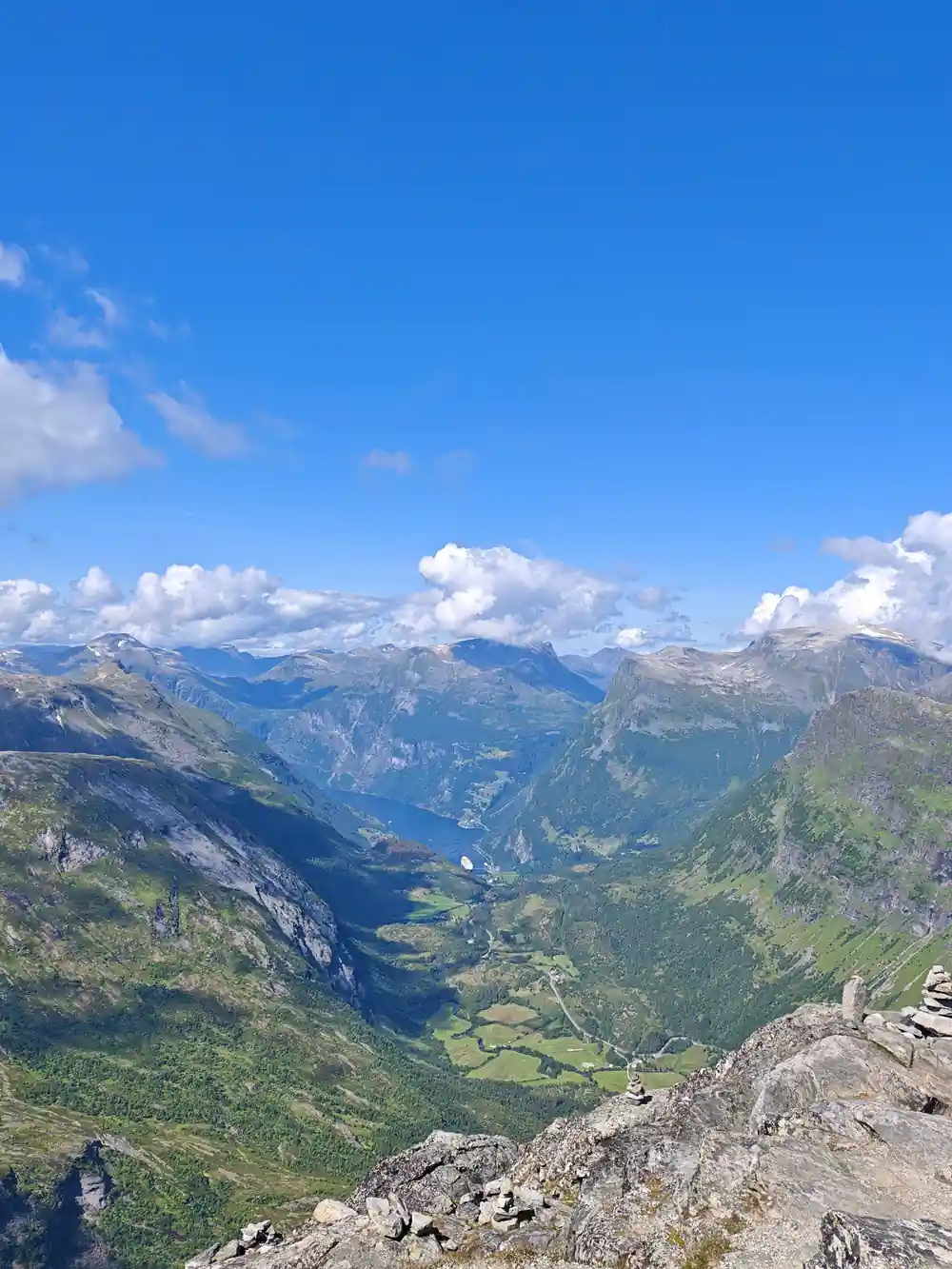
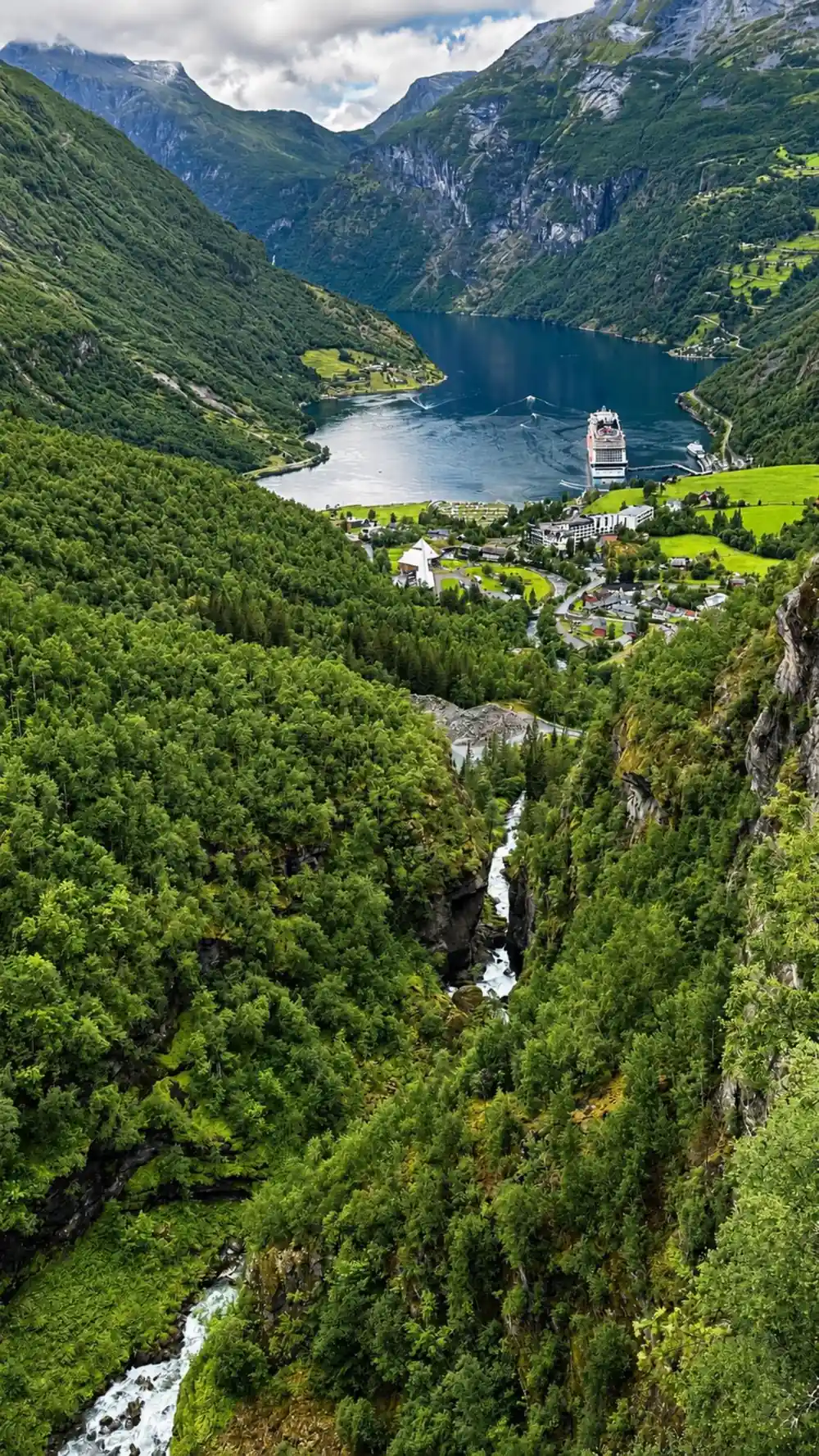
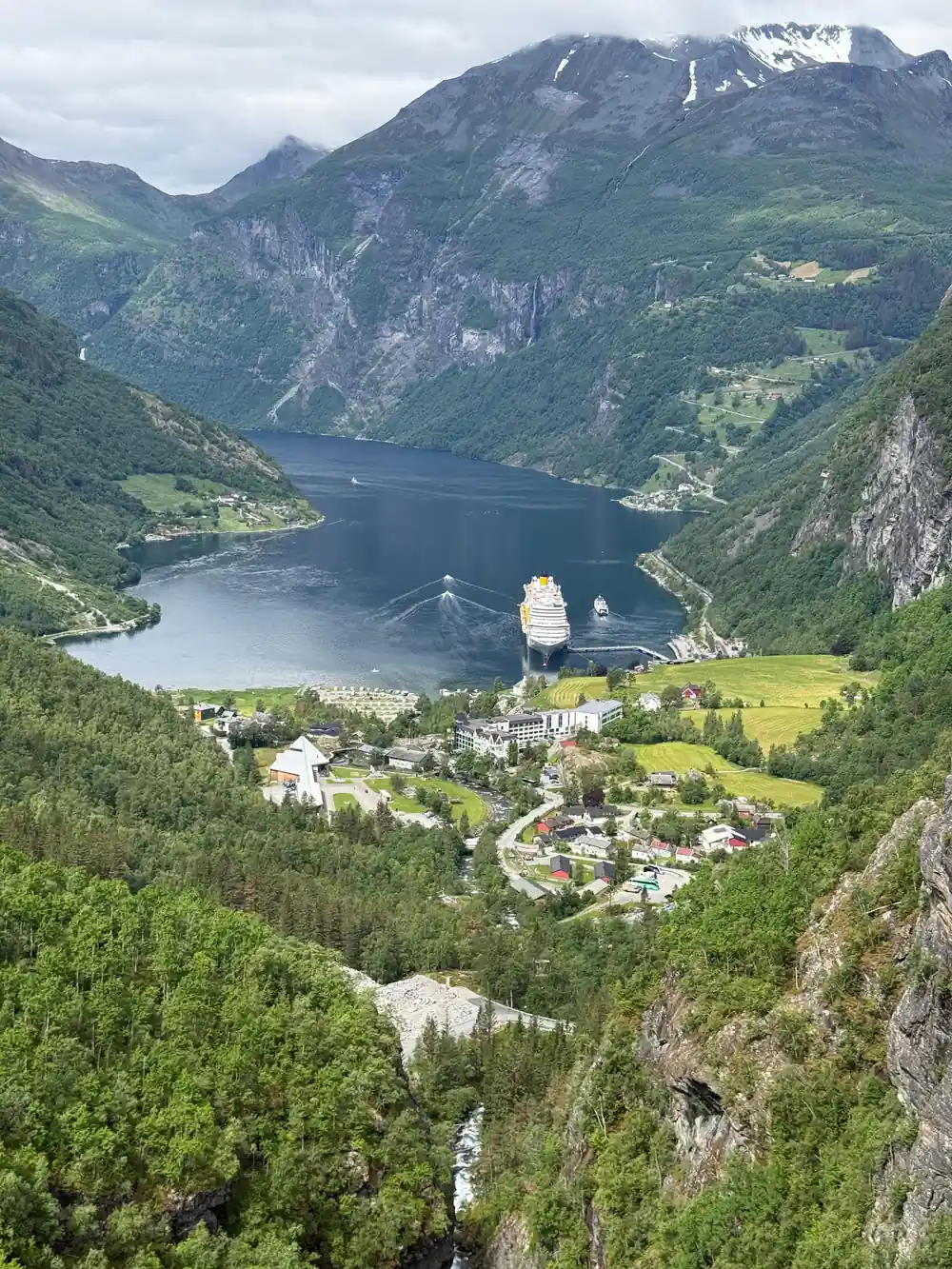
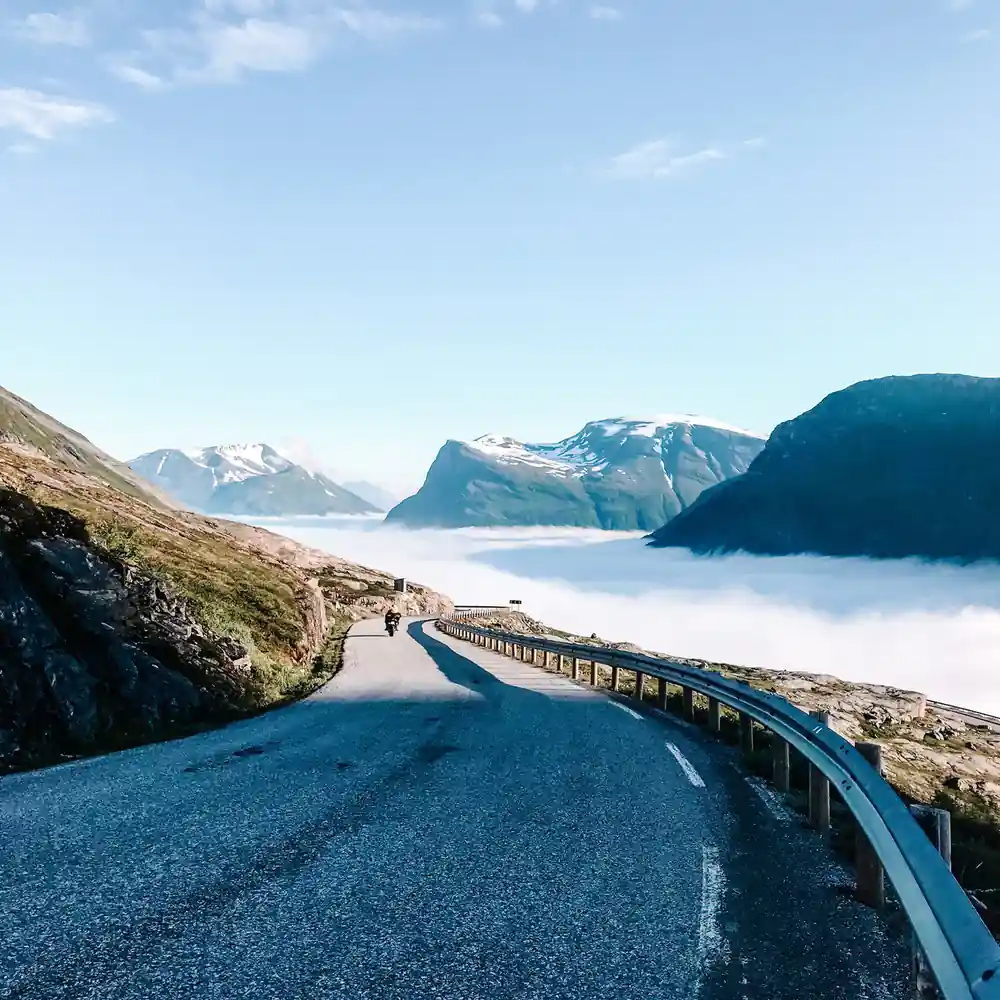
With a sheer drop of around 500 m beneath you and a mountain breeze blowing gently from below, you’ll feel like you’re floating.
Fresh snow is a particularly good reflector and almost doubles a person's UV exposure.
Dressing for Dalsnibba in any month
Wear or bring
Temperature rises and falls 1,500 metres
Geiranger village sits at sea level where weather near Geiranger Norway tends to be mild, but Dalsnibba stands at 1,476 metres on the mountain above. The air cools noticeably as the bus climbs, and the operator puts the summit 10 to 15 degrees colder than the village. Winter reverses the comfort: February at sea level hovers near freezing, but at altitude it plummets to minus 8°C or lower. Dress in layers that you can shed or add as the elevation changes during your 3 hour 30 minute tour. A windproof outer layer matters most, since exposure and airflow intensify the chill at height.
The road switchbacks and hairpins mean you will feel the transition gradually. Bring a jacket even on warm days in the valley. Waterproof trousers are wise if rain threatens, because cloud often wraps the summit and brings drizzle. Thermal leggings under regular trousers work well from October through April. Gloves, a hat and a scarf tucked into your coat protect extremities; the wind at the Dalsnibba Skywalk platform can gust above 40 kilometres per hour, making exposed skin uncomfortable within minutes.
Geiranger temperature at the quay is a poor guide to the summit. The Dalsnibba operator puts the difference at 10 to 15 degrees and recommends warm layers, a windproof jacket and good shoes even in summer heat.[5] Across the fjords, July is no exception up there: snow often still lies at the summit into June and July.[5]
The Day Geiranger Reported Forty-One Degrees
Fjord heat can be startling, and the archive holds one report that is startling even by that standard. On 18 June 1930 the Bergen paper Morgenavisen relayed a message sent from Geiranger to Sunnmørsposten: forty-one degrees of warmth had been noted there the previous day [1].
Treat that as what it is, a newspaper report rather than an official reading. The highest temperature ever officially recorded anywhere in Norway is 35.6 degrees, measured at Nesbyen in June 1970, and that record still stands. A figure of forty-one almost certainly came from a thermometer standing in direct sun rather than in a screen.
It is still worth knowing, because it tells you what the valley floor can feel like on a still summer day, and because the viewpoint you are heading for sits some 1,500 metres above it.
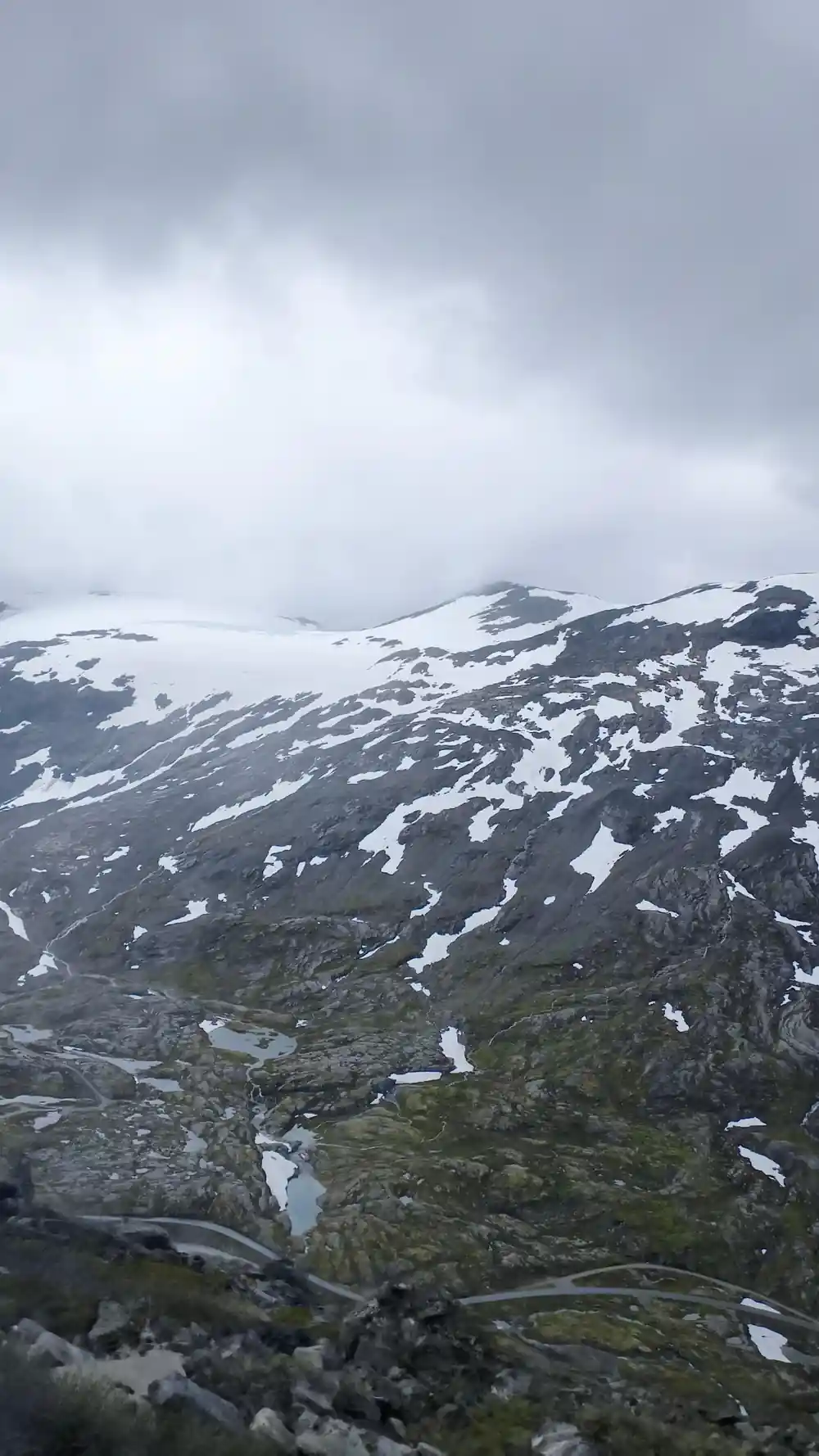
Snow can still lie beside the Dalsnibba summit platform in summer
When the Dalsnibba winter road opens and closes
The Nibbevegen mountain road that accesses Dalsnibba typically opens in mid-May and closes in September or October, though exact dates shift year to year. Heavy snow in April and May can delay the opening by weeks; road crews clear the passes as temperatures rise and visibility stabilises. By June, the route is almost always passable. Outside that season the road is closed to traffic. If you plan to visit between December and May, confirm in advance whether the tour is running, because road conditions determine the schedule.
Spring snow melt happens fastest in May and June when daylight lengthens and sun angle steepens. July and August offer the most reliable access. Autumn brings rain and the first frosts by late September; by October, snow can return to higher elevations without closing the road entirely. Plan a summer visit if road access is your priority. Winter visitors to Geiranger can explore the fjord by other means, such as boat tours, but Dalsnibba itself remains closed to the public bus route.
The operator's own record gives the real range. In 2025 the road ran from 12 May to 3 October, in 2020 it did not open until 12 June, and on 9 September 2026 it closed until further notice because of snow.[5][6]
Snow cover at Dalsnibba across twelve months
How much snow does Geiranger get varies greatly by season and elevation, but Dalsnibba retains snow far longer than the village below. The operator says snow often still lies at the summit into June and July, and that in spring and autumn there is often snow on the ground. October brings the first dustings, and November usually sees continuous snow cover beginning. December through March, Dalsnibba carries deep snow, often one to two metres depending on winter severity. April can still show substantial drifts. May sees rapid melt as daylight hours extend.
Summer visitors can still find snow at the top, and on a clear day the view reaches the fjord. Those in winter should expect snow-covered surfaces, iced railings and a transformed landscape. The Skywalk itself is cleared of dangerous ice and snow when the road is open, but the surrounding peaks and slopes remain white. The operator recommends good shoes even in summer heat. Sunglasses are essential in spring and early summer when snow reflects intense light; the glare off snow is a problem for eyes and can cause discomfort or temporary snow blindness even on cool days.
15°
The Dalsnibba operator says its summit can be 10 to 15 degrees colder than down in Geiranger.[5]
Cloud cover hides the view, but not always
What happens if cloud hides the summit view is a real possibility on any visit. Dalsnibba sits exposed and high, drawing weather systems that can blanket the platform in fog within hours. May, June, September and October see the highest risk of cloud; these shoulder seasons bring unstable air masses. Summer afternoons sometimes clear beautifully in the morning, then cloud rolls in by midday. If you arrive in thick fog, visibility may shrink to 50 metres. The Skywalk platform and the fjords below vanish; you see only grey. The tour still proceeds, and the experience of standing in cloud at the summit has its own quiet beauty, but photographs and landscape views suffer.
Geiranger in May is a mixed proposition for weather. The road is newly open, snow is melting, and rain is common, but clear days reward early risers who start tours in early morning before cloud builds. Afternoon cloud is predictable; morning visits often capture clearer skies. Winter and spring see frequent cloud. Autumn from September onward brings drying trends and clearer views. If a clear vista is essential to your visit, book a summer date. Keep expectations flexible for other seasons, and bring a camera with a wide lens; even in cloud, the steep fjord walls and the sense of altitude create memorable photographs.
Dalsnibba viewpoint weather is best judged on the day from the operator's summit webcam.[5] Is it cold on a fjords cruise? Geiranger Fjordservice warns of some windchill on its sightseeing boats, which run in all weather, and tells visitors to bring clothing for cool and wet weather.[7]
Layers and footwear that match the mountain
Start with a moisture-wicking base layer: merino wool or synthetic long sleeves and leggings. Add a fleece or wool mid-layer for insulation; this traps warm air and keeps you dry if you sweat during the bus climb. Your outer layer must be windproof and water-resistant; a quality rain jacket stops both wind chill and spray. Trousers should be full-length, sturdy and preferably water-repellent. Denim holds moisture and takes hours to dry, so avoid it. Jeans feel cold and clammy in mountain wind. Wear thick socks, preferably wool or wool blend; cotton socks absorb sweat and chill your feet. Bring two pairs and swap if the first gets damp.
Footwear matters more than many realise. Trainers offer poor insulation and grip on wet rock. Hiking boots with ankle support, stiff soles and treaded bottoms suit all seasons. In summer, a trail shoe with good grip works. In winter and spring, insulated boots rated for snow and ice prevent slipping on Dalsnibba's platforms and approach paths. Waterproof hiking boots keep moisture out. Gaiters, worn over boot cuffs, block snow from entering your boots in deep snow conditions. Bring a warm hat that covers your ears; heat loss through the head accelerates in wind. Gloves are essential October through May; in summer, sunglasses and sunscreen substitute. A neck scarf or buff protects skin and can cover your mouth against cold wind.
The winding road and motion sickness concerns
Does the winding road cause motion sickness on this tour? The Nibbevegen has multiple hairpin turns and steep switchbacks climbing the mountain. Some passengers feel nausea; others ride comfortably. The road itself is well-maintained and the bus driver navigates it regularly without abrupt movements. Motion sickness varies by individual sensitivity, prior experience and where you sit. Passengers in the front of the bus, closer to the driver's cabin, typically feel less nausea than those in the rear. Windows seat position matters too; looking out and following the landscape reduces queasiness more than staring ahead or inward.
Eat a light meal before boarding and avoid heavy, fatty foods; digestion demands blood flow that can worsen nausea. Stay hydrated but do not drink large volumes immediately before or during the climb. Sit on a side facing the outer windows and watch the scenery unfold rather than reading or looking at screens. Focus on a fixed point on the horizon. If you are prone to travel sickness, take medication such as antihistamines before the tour, following package instructions. Fresh air helps; open your window if the bus permits. The tour lasts 3 hours and 30 minutes, but the drive from Geiranger centre to the top takes about 30 minutes, so discomfort is temporary.
Drones and photography rules at the viewpoints
Are drones allowed at the viewpoints? Not everywhere, and at Dalsnibba the operator sets its own limit on where one may fly. The platform itself is crowded during peak season, and uncrewed aircraft pose safety risks to other visitors.
Photography with standard cameras and phones is unrestricted and encouraged. The Flydalsjuvet View Point, Eagle Bend and Djupvatnet Lake all offer excellent vantage points for stills and video. Polarising filters reduce glare off water and rock in bright conditions. A tripod helps if you want time-lapse or self-portraits, though space on the platform is limited. Early morning light (before 10 a.m.) often produces clearer images and fewer crowds. The tour includes photo stops, so guides will alert you to the best angles and timing at each location along the itinerary.
The Dalsnibba operator's own rule is narrower than a ban: drones may be flown only directly above its car park and main area. Visitors flying a drone in Norway must also be registered as drone operators.[5][10]
Days the Dalsnibba road was open, by season
Days from opening to closing date in the operator's own record of past seasons.[5]
Price a trip up to the Dalsnibba summit
Every figure is a "from" price for one adult from each tour's GetYourGuide listing, not a quote. Child prices may differ, so check the listing for your party.[4]
Weather dates for a Dalsnibba trip
Dressing for the summit
Check the webcam
Look at the Dalsnibba webcam for cloud and snow before the coach leaves Geiranger.[5]
Layer up
Wear warm layers and a windproof jacket even in summer; the summit can be 10 to 15 degrees colder.[5]
Pick shoes with grip
Good shoes matter: snow is often on the ground at the summit in spring and autumn.[5]
Protect your eyes
Bring sunglasses: fresh snow almost doubles UV exposure, and UV rises about 10% per 1,000 m.[8]
Settle your stomach
On the hairpins, look at a fixed point such as the horizon and avoid reading or screens.[9]
Dressed for the summit? See dates for the Dalsnibba coach tour
from US$117Reserve now & pay later