At a glance
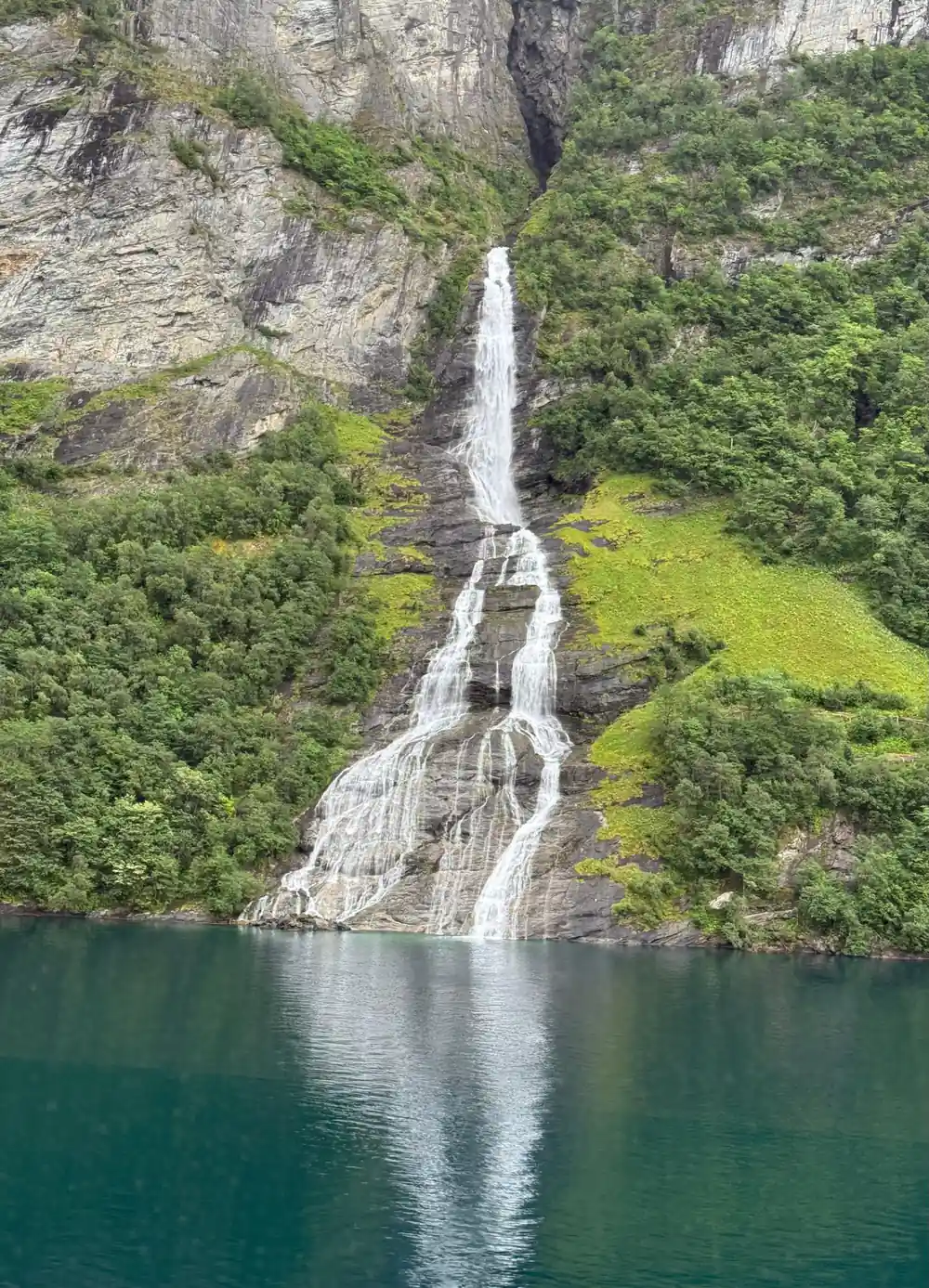
- Seven falls plunge into the fjord by the abandoned Knivsflå farm, and legend says the Suitor opposite courted the unmarried sisters in vain.[5][7]
- The Seven Sisters have an average fall of 250 metres, and the Bridal Veil drops 300 metres into the fjord.[7]
- The falls are most visible in the main snowmelt from May to July, and water levels depend on snow thaw and rain.[5]
- Meltwater gives the Bridal Veil its veil of spray for only a couple of weeks a year, so it is not visible all year round.[7]
- The Eagle Bend stop on the coach tour looks across the fjord to the Seven Sisters and the Knivsflå mountain farm.[9][12]
- Waterfall tasting boat from US$58 Duration1 hourPasses Seven SistersYes, and stops at the SuitorDeparts fromGeiranger HurtigbåtkaiRating4.40 from 131 reviews See this tour
- RIB from Geiranger from US$95 Duration1 hourPasses Seven SistersYes, with photo stopsDeparts fromGeiranger BryggeRating4.81 from 1,203 reviews See this tour
- RIB from Hellesylt from US$104 Duration1 hourPasses Seven SistersYes, with photo stopsDeparts fromHellesylt CampingRating4.94 from 238 reviews See this tour
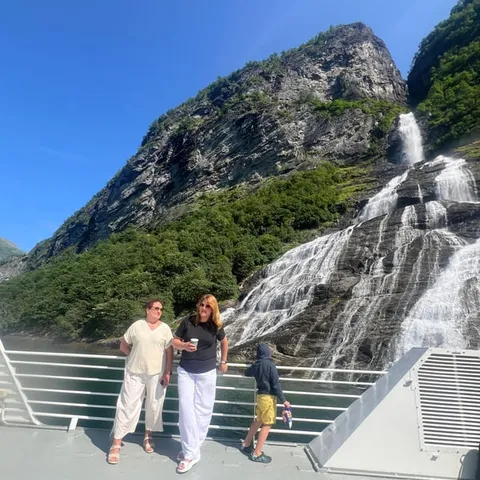
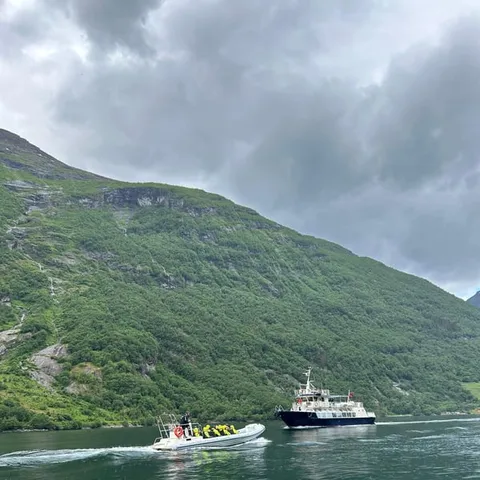
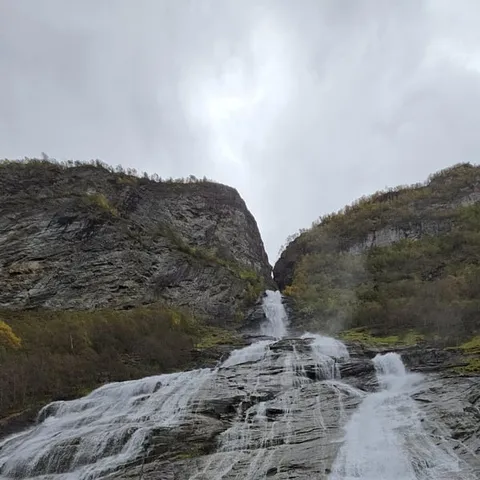
Legend has it that the Suitor was constantly proposing to the beautiful Seven Sisters on the other side of the fjord, but he was steadfastly refused, and in his despair, turned to drink.
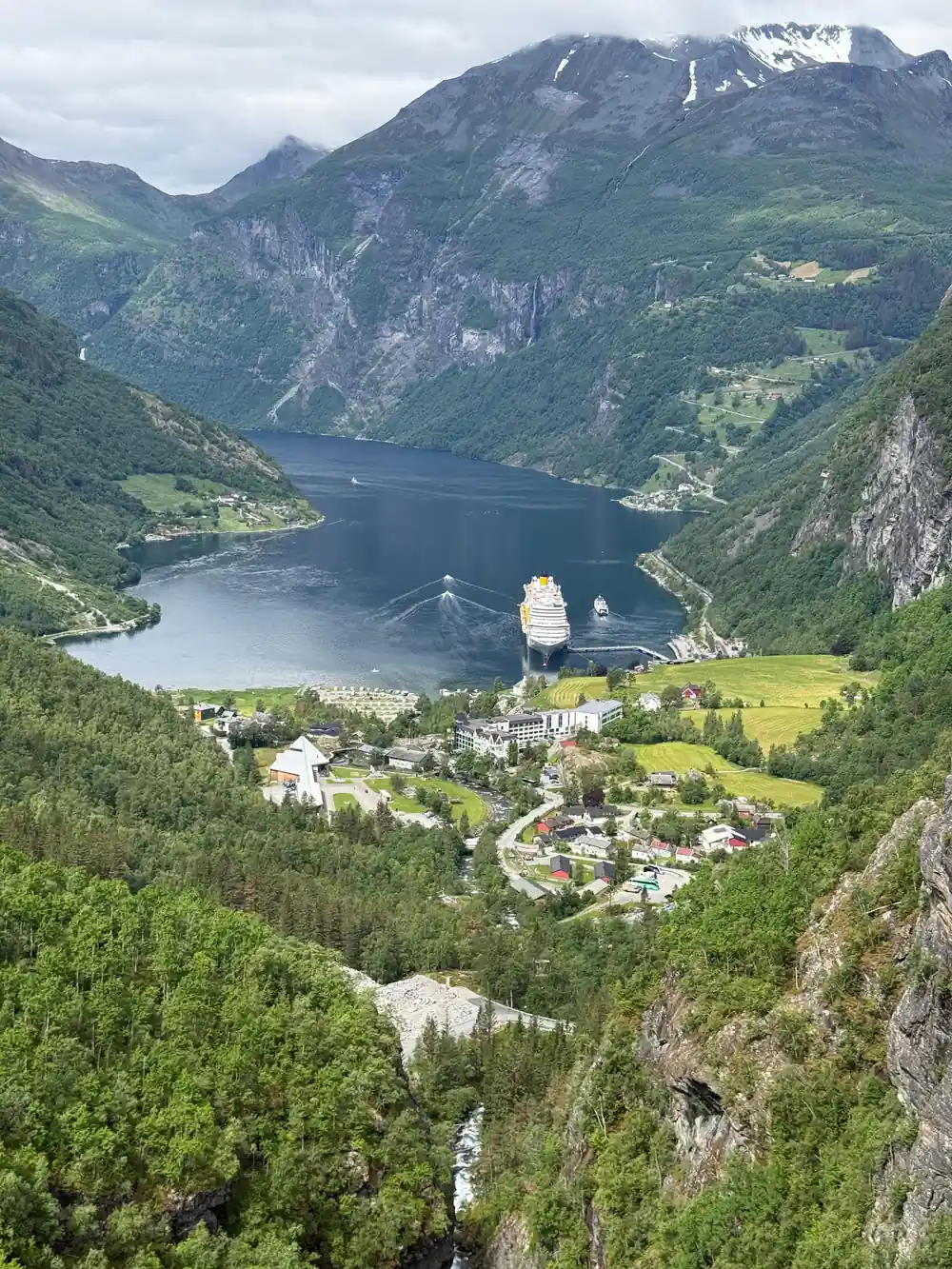
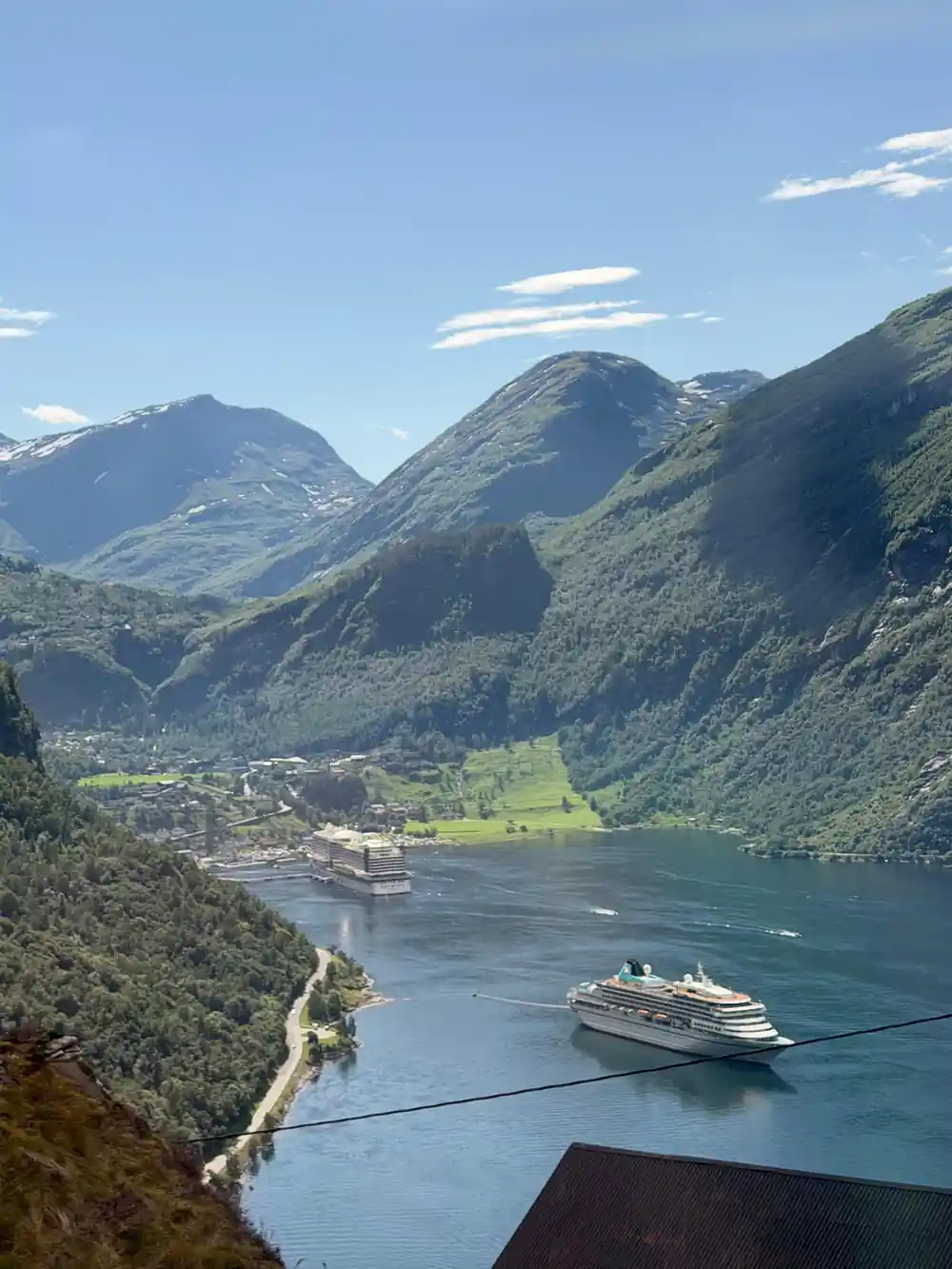
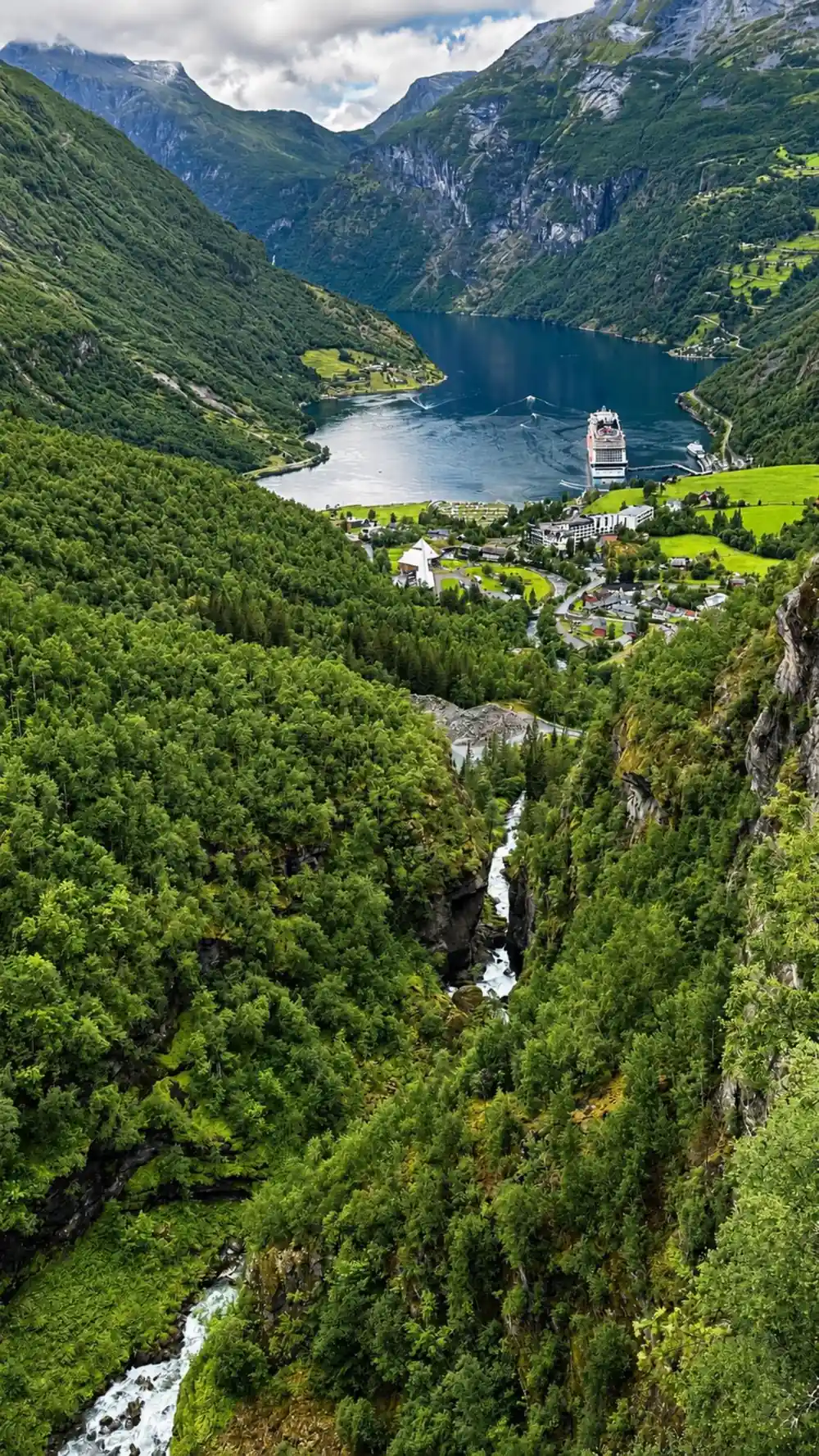
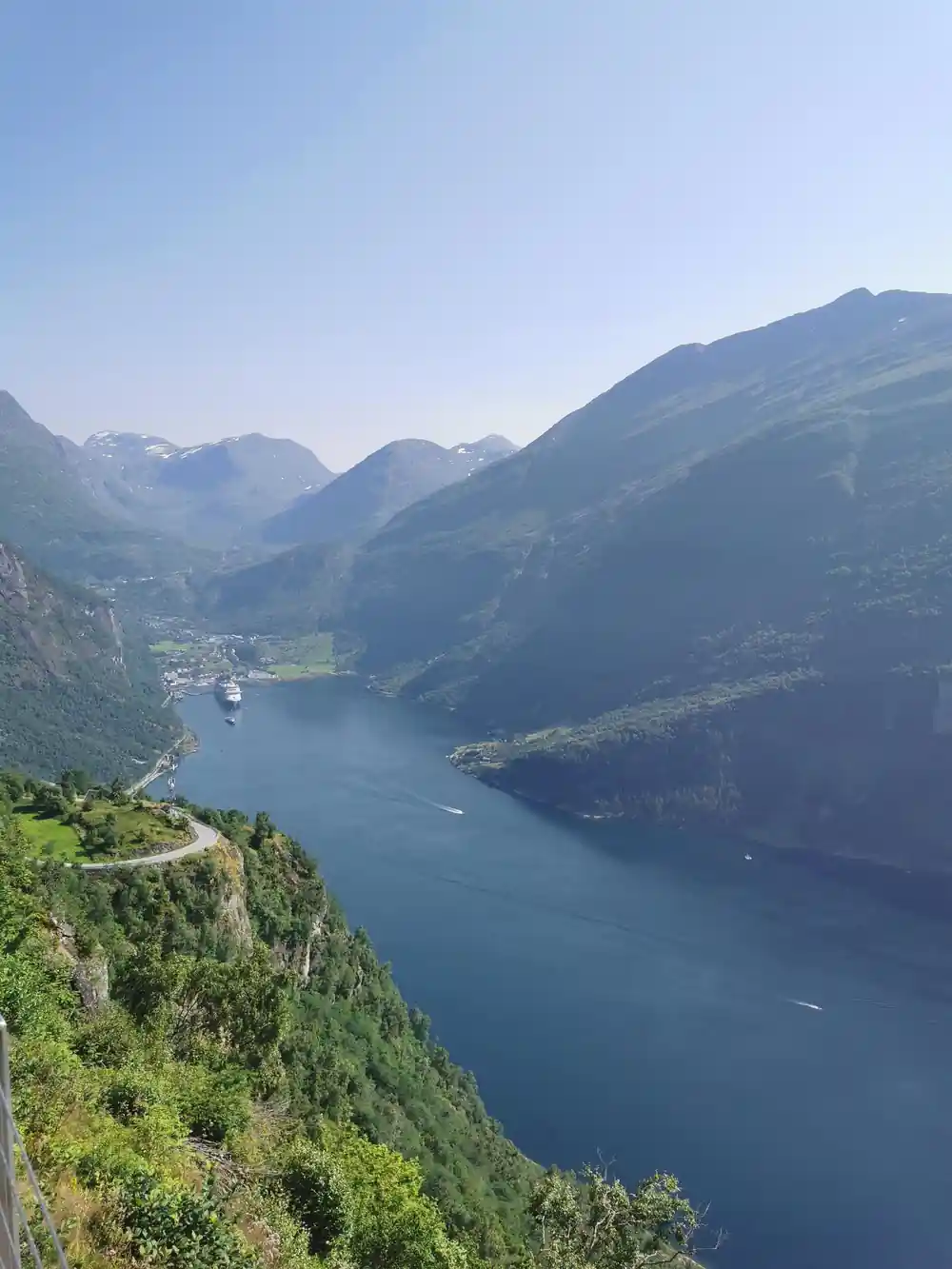
From here the view opens towards Geiranger, across the Geirangerfjord with its near-perpendicular mountainsides, the "Seven Sisters" waterfalls and the Knivsflå mountain hamlet.
Seeing the Seven Sisters: by boat or from above
When the falls run full
The Legend of the Seven Sisters
Norwegian folklore tells of seven sisters who fell in love with a single suitor and fought endlessly for his attention. In despair, they threw themselves from the mountainside above the Geirangerfjord, their tears becoming the waterfalls that cascade down the cliffs today. The Suitor, heartbroken, stayed on the opposite bank, where his waterfall splits around a rock face shaped like a bottle. This romantic tragedy has been passed down through generations, transforming a geological wonder into an emotional landscape where nature itself seems to mourn lost love.
When you visit the fjord with waterfall views on the guided tour, you are quite literally looking at the physical manifestation of this ancient story. Each cascade holds meaning beyond its natural beauty, connecting you to centuries of storytelling and cultural memory.
The version Fjord Norway tells is plainer. The Seven Sisters were all unmarried, and the waterfall on the other side of the fjord was called the Suitor after several unsuccessful attempts to court them; refused again and again, in his despair he turned to drink.[5][6] The name itself comes from the look of the falls: from a distance they resemble the hair of seven women.[7]
Measuring the Seven Sisters: Heights and Streams
The Seven Sisters waterfall system drops about 410 metres from the plateau to the fjord below, its tallest single fall running some 250 metres, creating one of the most dramatic vertical drops in the region. Contrary to what the name might suggest, the falls do not always display exactly seven distinct streams. During peak snowmelt in spring and early summer, the combined flow creates a powerful, unified cascade that can appear as multiple braided streams depending on water volume and wind conditions. There are seven falls, each with its own flow, but when the water level drops not all seven may show equally clearly.
The variation in visible streams throughout the season reflects the dramatic changes in Alpine water supply. What tourists see in July differs markedly from June conditions, making the timing of your visit significant for observing the falls' true character.
Store norske leksikon gives the seven falls an average drop of 250 metres, and names the Knivsflå rivers as their source, beside the abandoned Knivsflå farm, which was left as early as 1898 in an area badly exposed to slides.[7] For the Geiranger Seven Sisters waterfall, Geiranger Fjordservice puts the highest single free fall at 250 metres.[8] How many of the seven you can pick out depends on the water level, which follows snow thaw and rain.[5]
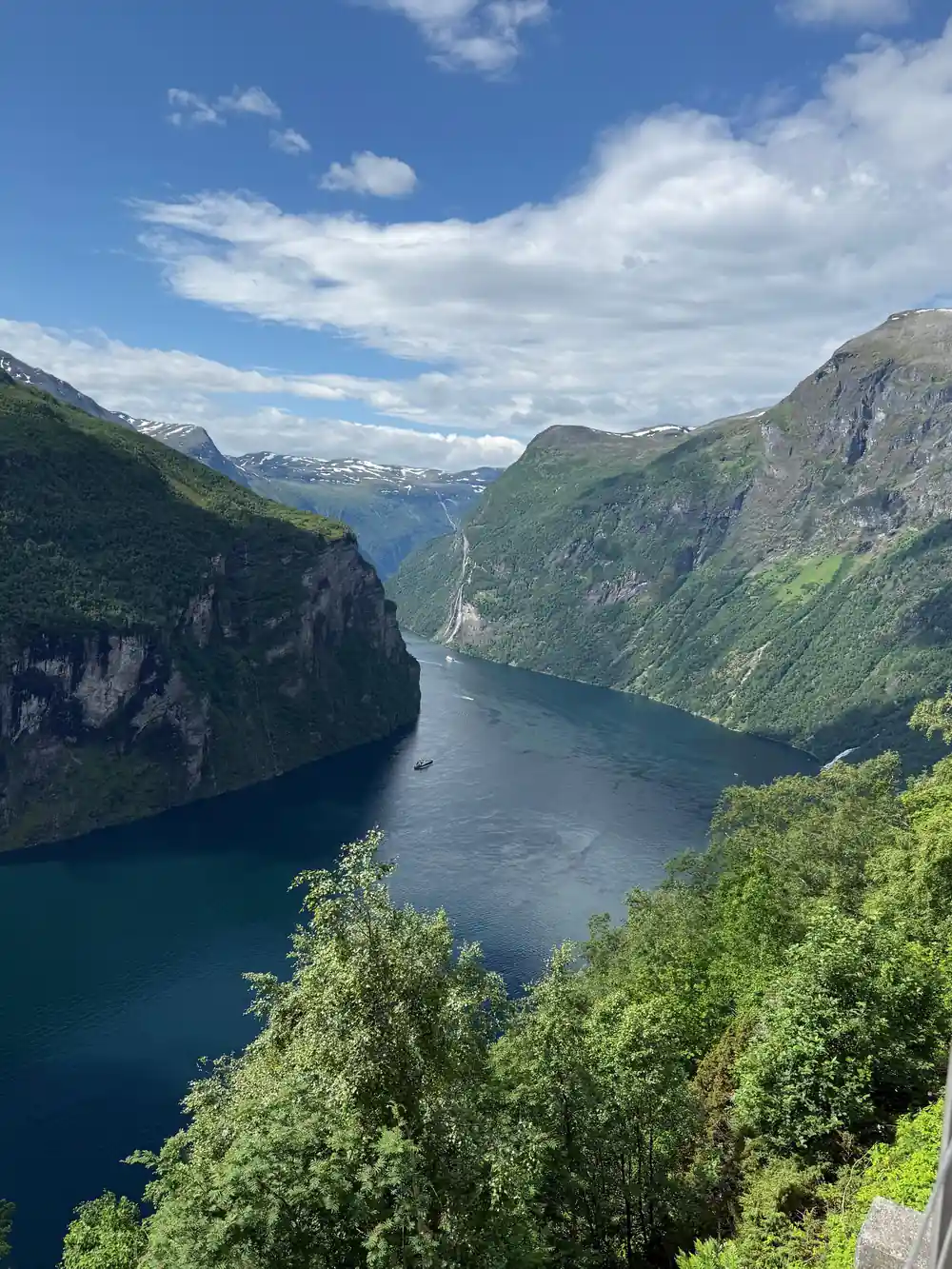
Norway's fjords: waterfalls like the Seven Sisters plunge straight into the Geirangerfjord
The Bridal Veil's Shifting Shape Through Summer
The Bridal Veil waterfall earns its name for only a few weeks a year, when meltwater from the mountains creates a spray that looks like a bridal veil. As the season progresses and snowfields higher on the mountain shrink, this graceful cascade transforms dramatically. By mid to late summer, the Bridal Veil becomes increasingly narrow and fragmented, sometimes breaking into disconnected threads that barely reach the fjord. This metamorphosis is not random but follows the predictable cycle of Alpine snowmelt, which peaks in June and gradually diminishes through August and September.
Understanding this transformation helps explain why a waterfall seen in midsummer appears almost unrecognizable by autumn. The change follows the water supply, and the Bridal Veil is not visible all year.
Store norske leksikon places the Bridal Veil on the north side of the fjord, just west of the Seven Sisters, and calls it the first waterfall you see when sailing in. It is not visible all year: for a couple of weeks a year, meltwater and the higher flow it brings create a spray that looks like a bridal veil. The fall drops 300 metres into the fjord from its source on Ystehornet.[7]
The Suitor's Bottle Rock and the Source Above
Across the Geirangerfjord from the Seven Sisters is the Suitor, a waterfall that splits at the centre around a rock face shaped like a bottle, completing the love story of the waterfalls. This geological marker has endured while the legends around it have flourished, serving as a focal point for understanding the valley's mythology. Higher up, the Seven Sisters are fed by the Knivsflå rivers, and the Bridal Veil falls from Ystehornet.
The water that cascades down as the Geirangerfjord's waterfalls begins its journey high on the plateau, accumulating as seasonal snow throughout winter. When spring arrives, this stored water begins its long descent through channels and crevices, eventually emerging as the falls seen from the fjord.
On the water, the Suitor is a waterfall rather than a rock. Friaren lies on the opposite bank to the Seven Sisters, and its falls split at the centre, revealing a rock face in the shape of a bottle.[6] Its original name is Skageflåfossen. The Skageflå farm sits on a ledge 250 metres above the fjord with a view of the Seven Sisters, and King Harald and Queen Sonja chose it for their silver wedding in 1993.[7]
300 m
The Bridal Veil drops 300 metres into the Geirangerfjord, but its veil of spray appears for only a couple of weeks a year.[7]
Seasonal Flow: When Falls Reach Full Force
The Geirangerfjord waterfalls perform at their most spectacular in May and June, when Alpine snowmelt reaches its peak. During these months, the combination of warmer temperatures and daylight hours triggers the release of enormous volumes of water from high-altitude snow and ice. The Seven Sisters, in particular, displays its most powerful appearance during this window, with all streams flowing with impressive force. From late June onward, as surface snow depletes and only deeper ice fields continue melting, flow rates begin their gradual decline.
By August and September, you will notice a marked reduction in the water volume flowing over most falls, though rain can still raise the water level. This natural rhythm means that visiting in early summer guarantees a more dramatic display than a late summer journey.
Fjord Norway puts the window at the main snowmelt from May to July, when the falls are most visible, and notes that the water level depends on snow thaw and precipitation.[5] Anyone planning around the fjords' best time to visit for waterfalls should aim at those months, and plan at least part of the day on the water, because Fjord Norway rates a boat trip on the Geirangerfjord as the best way to see them.[5]
Which Viewpoints Reveal Which Falls
Your guided tour makes four stops along the route, each with its own view. Flydalsjuvet View Point looks out over Geiranger village and the fjord. Eagle Bend offers a sightline across the fjord toward the Seven Sisters. Dalsnibba Skywalk is positioned at the highest elevation on the tour.
Not every waterfall is equally visible from every stop, so for the Seven Sisters keep your camera ready at Eagle Bend, which looks across the fjord to them. The seasonal variations in water flow mean that some falls may be barely visible from certain viewpoints in autumn, while appearing prominent and powerful from the same spot in early summer.
Ørnesvingen, at the top of the eleven hairpin bends of the Eagle Road, opens a view towards Geiranger and across the Geirangerfjord to the Seven Sisters and the Knivsflå mountain hamlet, and the viewpoint has a waterfall of its own.[9] On a Geiranger waterfall tour by coach, that is the stop to have a camera ready: the tour booked from this site takes 3.5 hours and stops at Flydalsjuvet, Dalsnibba, Djupvatnet and Eagle Bend.[12]
Waterfalls near Geiranger on foot and by boat
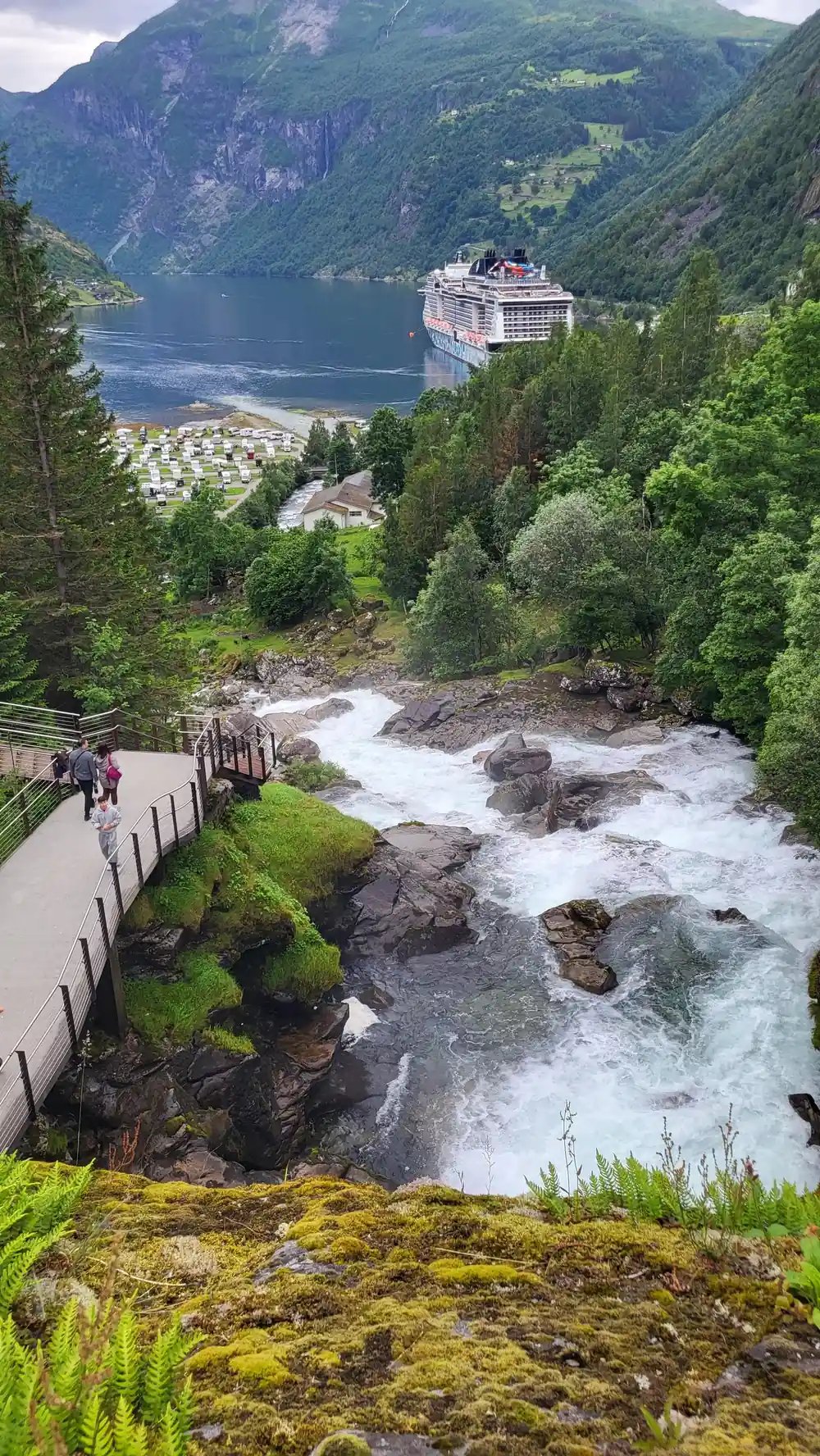
The Waterfall Walk starts in the centre of Geiranger and follows the Geiranger river up to the Norwegian Fjord Centre: 326 steps and about 0.9 km, with a fence along large parts of it. Its main sight is Storfossen, a river and waterfall that runs big and loud in the spring melt and freezes in winter.[11] Fjord Tours sells a two-hour guided version led by a Fjord Ranger, available all year from 690 NOK.[11]
For a Geirangerfjord, Norway waterfall you can stand behind, hike to Storseterfossen. From Vesterås farm, 320 metres above sea level, the trail climbs stone steps built by Sherpas from Nepal and completed in 2014 to a plateau at 540 metres, where a secured path goes down beneath the falls. It takes 45 to 60 minutes each way, and the wet parts are slippery; park at Hole by the main road or at the Norwegian Fjord Centre, or ride an electric bike up to Vesterås farm.[10] Visitors were already walking behind it in 1922 and seeing the sky through the spray.[1]
From the water, the 75-minute sightseeing cruise from Geiranger passes the Seven Sisters, the Suitor, Bringefossen and the Bridal Veil, from NOK 610 for an adult with children at half price, and its operator says the boat passes very close to the Suitor. The same operator singles out Blomberg, a fjord farm 450 metres above sea level whose view takes in the Seven Sisters, the Bridal Veil and the Suitor together.[8]
Ways to see the falls, in minutes
Times from each operator and trail page; the hike is 45 to 60 minutes each way.[8][10][11][12]
Price a close look at the waterfalls
Every figure is a "from" price for one adult and not a quote. Child prices may differ, so check the listing for your own party before you book.
When to see the falls
Seeing the falls properly
Time it for the melt
Aim for May to July, when snowmelt makes the Seven Sisters most visible.[5]
Get on the water
The Seven Sisters are best seen from a boat on the Geirangerfjord.[5]
Look for the bottle
Across the fjord, the Suitor splits around a rock face shaped like a bottle.[6]
Take the high view
From Eagle Bend the view crosses the fjord to the Seven Sisters and Knivsflå farm.[9]
Walk behind Storseterfossen
A hike of 45 to 60 minutes each way from Vesterås farm leads to a path beneath the falls.[10]
See the Seven Sisters from Eagle Bend on the Dalsnibba tour
from US$117Reserve now & pay later