At a glance
- The port sets a ceiling of about 6,000 cruise passengers a day in Geiranger between 20 June and 10 August.[3]
- In a still fjord ringed by mountains, NILU calculated nitrogen dioxide of up to 180 micrograms per cubic metre on days with three to five ships.[6]
- A brand-new electric catamaran runs two-hour Silent Fjord Cruises from Geiranger in 2026, from 630 NOK for adults.[7]
- Since 1 January 2026, passenger ships under 10,000 gross tonnes must use energy that emits no CO2 or methane in the World Heritage fjords.[1]
- Ships of 10,000 gross tonnes and more come under the rule on 1 January 2032, and shore power is mandatory wherever it is available.[1]
| Rules since 2019 | From 1 January 2026 | From 1 January 2032 | |
|---|---|---|---|
| Which ships | Ships in the World Heritage fjords[3] | Passenger ships under 10,000 GT[1] | Passenger ships of 10,000 GT and up[1] |
| What is required | No incinerator, no black or grey water discharge[3] | No CO2 or methane in use; biogas allowed[1] | The same requirement[1] |
| Who sets it | Norwegian Maritime Authority[3] | Climate ministry, via Maritime Authority[1] | Climate ministry, via Maritime Authority[1] |
| Cruise traffic | 617,545 cruise passengers in 2019[4] | 118 Geiranger calls on the 2026 list[11] | Possibly fewer ships, more road traffic[4] |
The zero-emission requirement will contribute to technological development and lower emissions, while also ensuring that the spectacular World Heritage fjords remain attractive tourist destinations.
Water and air pollution from cruise ships remains a significant threat to the property
What the emission rules change for a visit now
Lower-emission choices
Why Geirangerfjord Draws a Million Visitors Each Year
Geirangerfjord has been on the UNESCO World Heritage List since 2005, as one of the five West Norwegian Fjords with the Nærøyfjord, Aurlandsfjord, Sunnylvsfjord and Tafjord.[2] IUCN's World Heritage Outlook counts almost 1 million tourists visiting the Geiranger centre in 2018, before the pandemic, and more than a million visitors to the World Heritage property as a whole as early as 2002.[4]
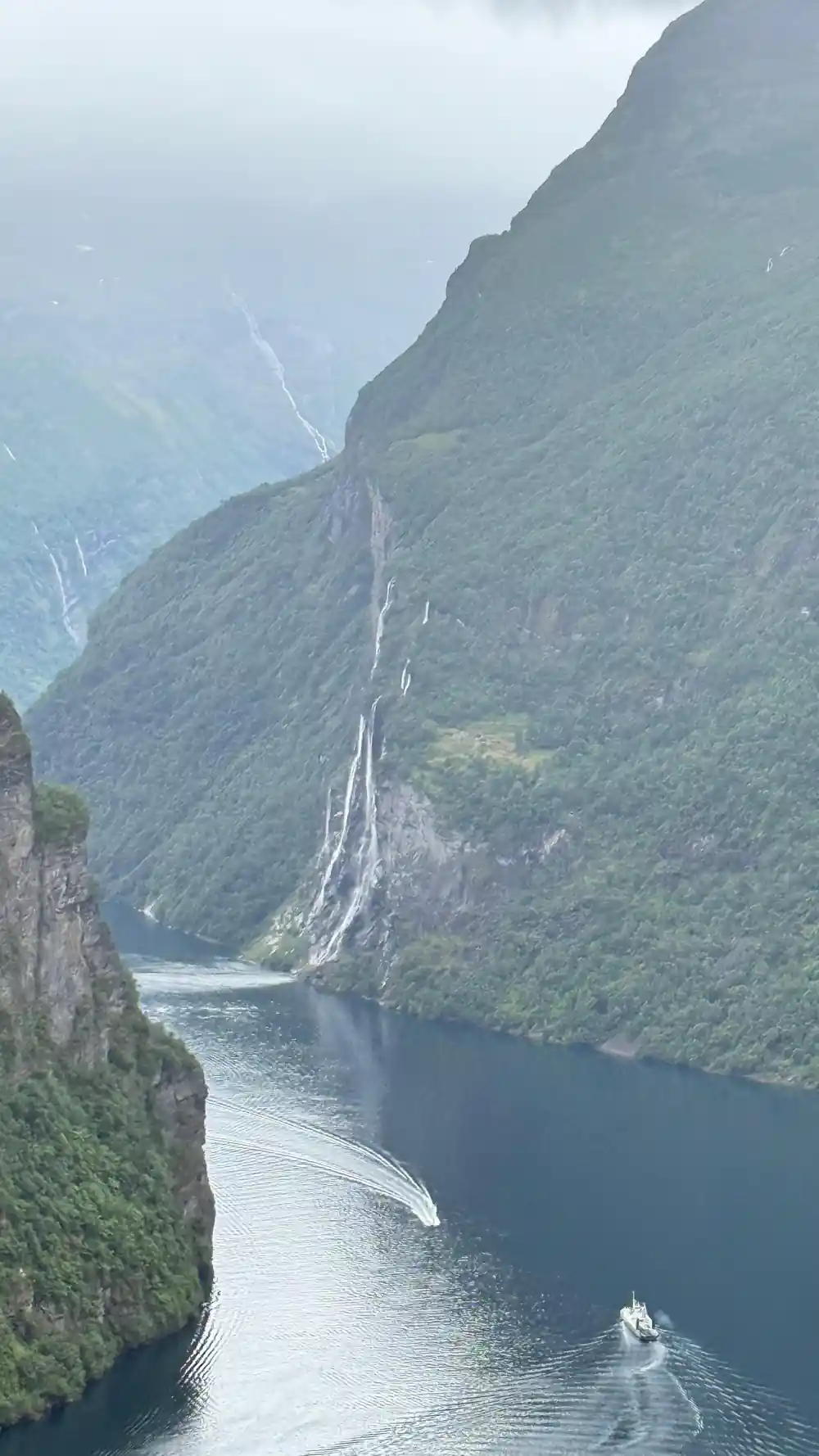
Why are fjords popular tourist spots? The IUCN assessment of the West Norwegian Fjords gives the physical answer: Geirangerfjord and Nærøyfjord are among the world's longest and deepest fjords, with rock walls rising up to 1,400 m from the sea and reaching 500 m below sea level.[4] The same assessment notes that peak-season visitors make up more than 80% of the total.[4]
How Still Air Traps Ship Exhaust in the Fjord
Aftenposten described the problem in 2006: a dead-still fjord ringed by high mountains means ship emissions can be clearly visible on some days to people visiting the village.[6] The analysis NILU made for the paper found the highest concentrations at ground level when the wind blows at two to three metres a second into the fjord from the north-west.[6]
Cruise traffic has grown since. Across the World Heritage site, 308 cruise ships carried 265,585 passengers in 2002, and 328 ships carried 617,545 in 2019, and IUCN still counts water and air pollution from cruise ships as a significant threat to the property.[4] NILU said in 2018 that it was not measuring air quality in Geiranger, because it had no assignment to do so.[5]
NILU, the Norwegian Institute for Air Research, explains the mechanism. In an inversion the air at ground level is as cold as or colder than the air above it, and emissions are then barely diluted by wind; inversions happen more often in winter.[5] Calculations NILU made for Aftenposten in 2006 put nitrogen dioxide in Geiranger at up to 180 micrograms per cubic metre on days with three to five cruise ships, with the exhaust settling like a grey-blue lid over the village.[6] Measurements NILU took during part of the 2010 cruise season were milder: no hourly nitrogen dioxide limit was exceeded, and the daily PM10 limit was exceeded twice, within the number allowed for a year.[5]
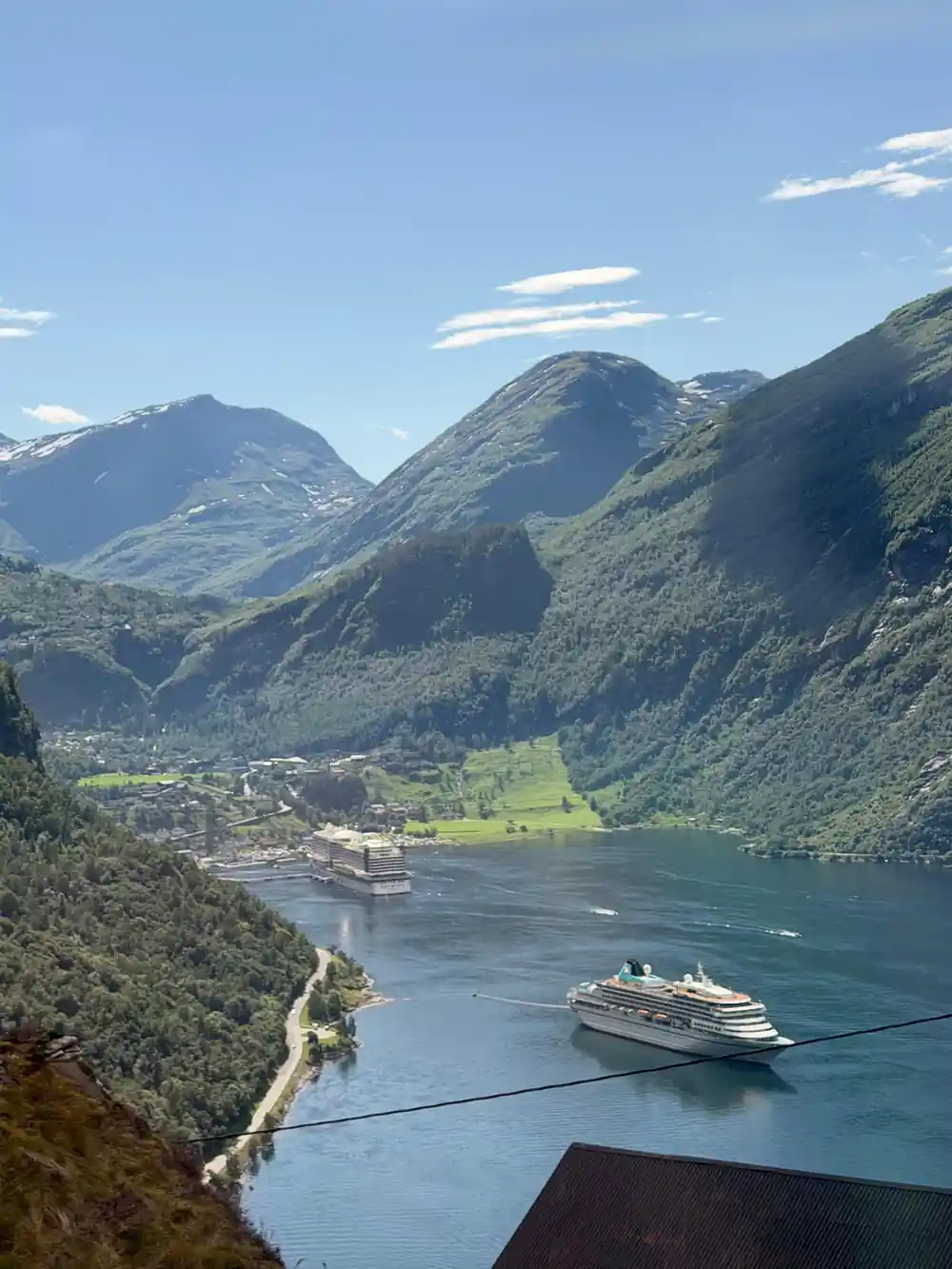
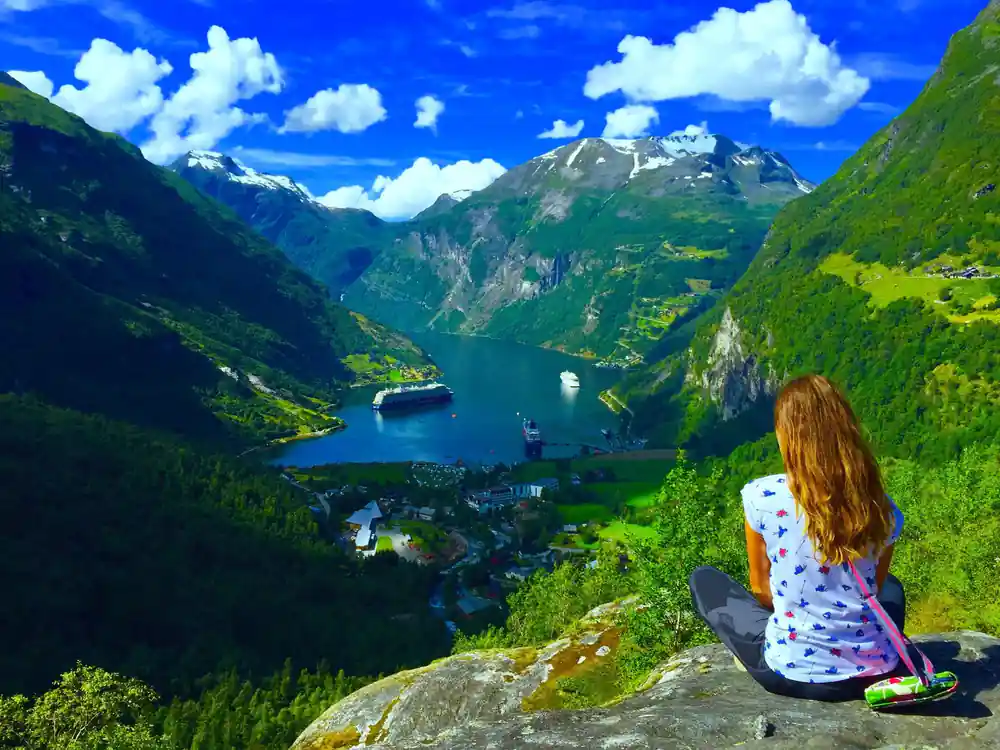
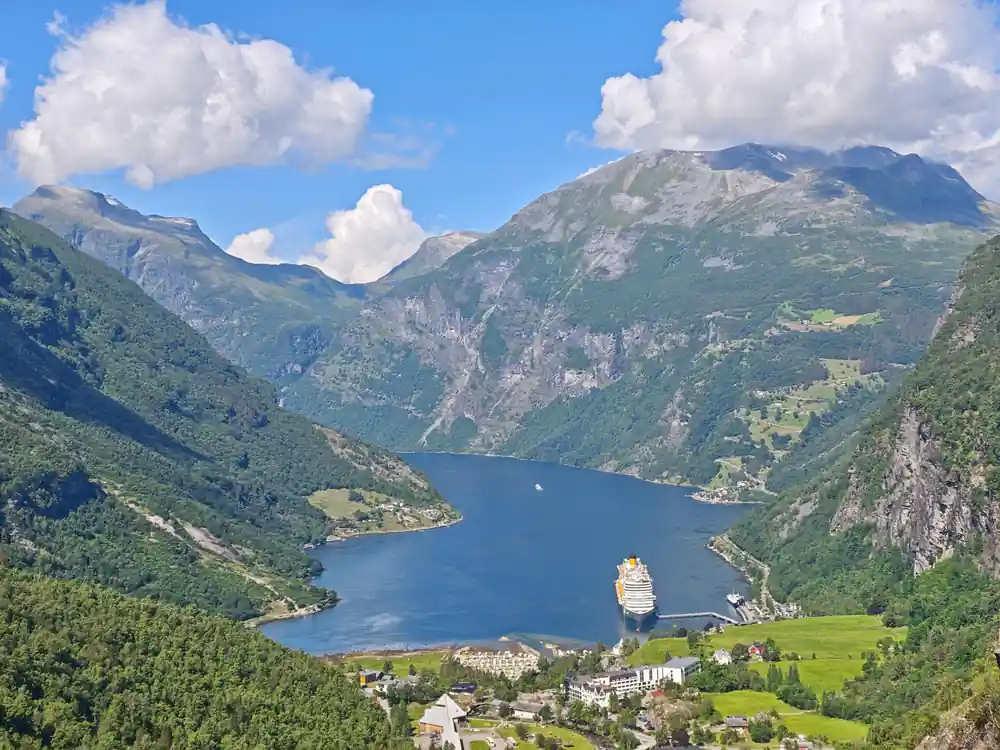
A cruise ship in the narrow Geirangerfjord below steep green slopes
Electric Buses and Battery-Powered Ferries Are Arriving Here
Rules on the water started before the zero-emission deadline. Under the Norwegian Maritime Authority's environmental regulations for the World Heritage fjords, in force since 1 March 2019, open scrubber systems are not accepted, fuel may contain at most 0.1% sulphur, and ships of 1,000 gross tonnes and more had to meet the Tier III limits for nitrogen oxides by 1 January 2025.[3]
The Norwegian Maritime Authority gives batteries and fuel cells powered by hydrogen or ammonia as examples of technology that meets the zero-emission requirement.[2] Passenger ships may also use biogas, but only if it is kept separate from fossil fuel, bunkered within the last month before the ship enters the fjords, and matched to the expected consumption of the voyage.[1]
On the fjord itself, electric boats are already sailing. Geiranger Fjordservice's Silent Fjord Cruise runs two hours on a brand-new electric carbon-fibre catamaran, new in 2026, which leaves from behind the tourist information building, 20 metres from the cruise ship quay.[7] Geirangerfjord III is a 46-metre hybrid catamaran for up to 280 guests that can travel on electric power, sailing between Ålesund and Geiranger as well as inside the fjord.[8] A one-way electric crossing from Ålesund to Geiranger takes three hours and starts from US$112.[13]
UNESCO Listing Made Environmental Rules Mandatory, Not Optional
Enforcement sits with Norway. The zero-emission requirement applies to passenger ships, defined as vessels that can carry more than 12 passengers, and the Norwegian Maritime Authority may supervise compliance and, where necessary, take administrative measures under the Ship Safety and Security Act or impose violation fines.[2]
The rule itself is Norwegian. On 3 May 2018 the Storting asked for zero emissions from cruise ships, tourist boats and ferries in the World Heritage fjords by 2026 at the latest, covering the Nærøyfjord, Aurlandsfjord, Geirangerfjord, Sunnylvsfjord and Tafjord.[2] The Norwegian Maritime Authority adopted it on behalf of the Ministry of Climate and Environment in April 2025. Ships must use energy that emits no carbon dioxide or methane while in use; biogas is accepted under strict conditions, and shore power is mandatory where it is available.[1] Earlier rules, in force since 1 March 2019, already ban incinerators in the Geirangerfjord and the discharge of black and grey water into the fjords.[3]
2032
From 1 January 2032, passenger ships of 10,000 gross tonnes and more must also meet the zero-emission rule in the World Heritage fjords.[1]
How the Village Manages Peak-Day Crowds
Most of the pressure falls in summer. On the 2026 port list, calls at Geiranger run from 4 April to 7 November, June, July and August hold most of them with July the busiest month, and some dates list two ships at Geiranger at once.[11]
Some of the pressure is handled at the port. Between 20 June and 10 August it sets a ceiling of about 6,000 cruise passengers a day in Geiranger, to meet a recommendation under the Harbours and Fairways Act. Pool and party music on ships is allowed only from 08:00 to 18:00, outside PA systems are not allowed, and tender boats must stop their engines at the ship's side and alongside the jetty.[3] The SeaWalk floating pier was part of the same thinking: in 2013 the port authority said tender operations took time, were costly and were not very environmentally friendly, and had kept many passengers on board.[9]
Today's Guided Tour: What You'll See and Experience
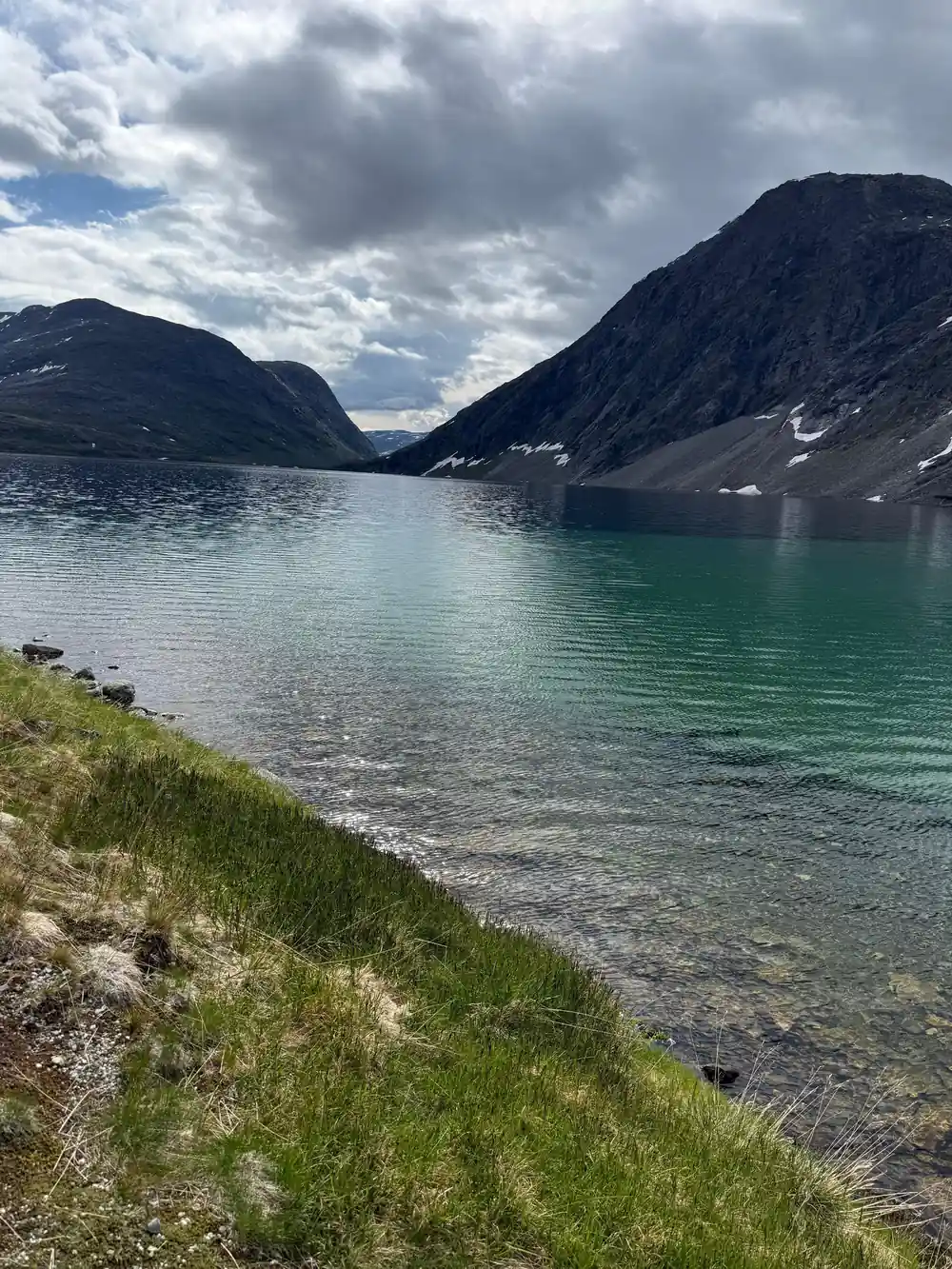
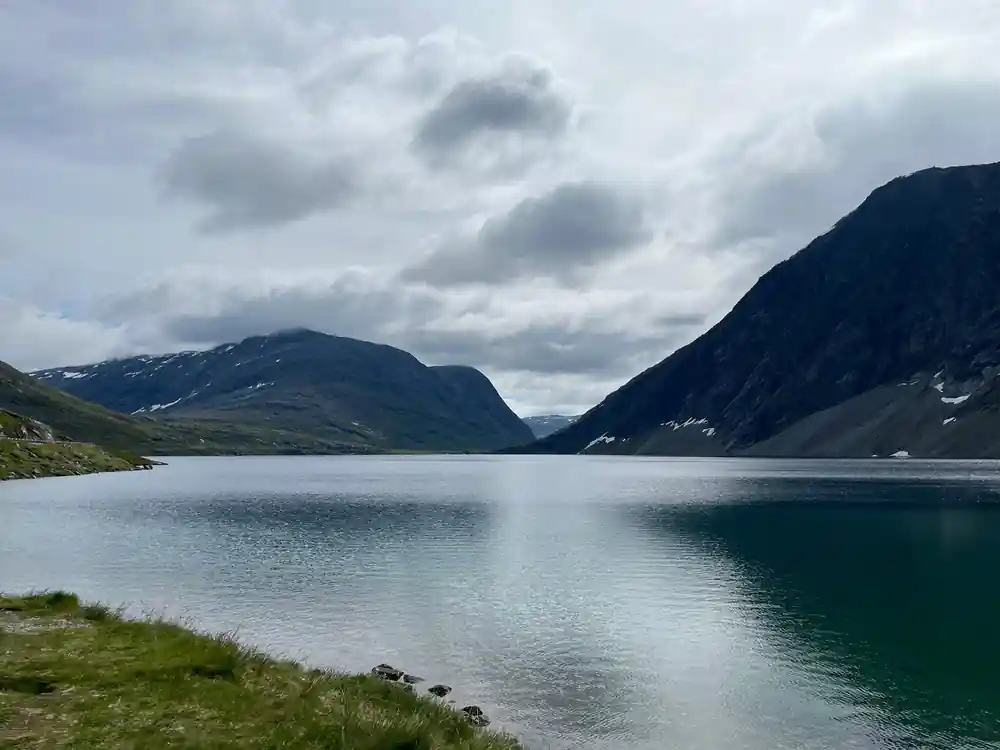
The Dalsnibba coach tour booked from this site takes 3 hours 30 minutes with a live guide who speaks English. Its stops run in order from Flydalsjuvet View Point to Dalsnibba, then Djupvatnet Lake and Eagle Bend, before it arrives back in Geiranger.[12]
Geiranger Skywalk Dalsnibba is 21 km from Geiranger, about 30 minutes' drive. Its road can close at short notice when snow or ice threatens, and early and late in the season it is closed at night.[15]
What a Geiranger Visit Might Look Like in 2035
On a fjords cruise, Norway's deadline for large ships is 1 January 2032.[1] The 2026 port list shows how much that covers: MSC Euribia, at 182,500 gross tonnes, is a regular caller, while Le Lapérouse, at 9,920, sits just under the 10,000 line.[11]
IUCN warns that the rules may lead to fewer cruise ships but more road traffic as visitors switch transport.[4] The port's own answer is a Fjord Network of quays and charging points for electric boats, meant to move bus and car traffic onto smaller zero-emission boats.[10]
Gross tonnage of ships on Geiranger's 2026 list
The 10,000 GT line sets the zero-emission deadline: 2026 below it, 2032 at or above it.[1][11]
Price a Geiranger day on and above the fjord
Every figure is a "from" price for one adult and not a quote. Child prices may differ, so check the listing for your own party before you book.
Dates that shape a Geirangerfjord visit
How the fjord rules arrived
Parliament sets the goal
On 3 May 2018 the Storting asked for zero emissions in the World Heritage fjords by 2026 at the latest.[2]
Ship rules tighten
Rules in force from 1 March 2019 banned black and grey water discharge into the fjords.[3]
The requirement is adopted
The Norwegian Maritime Authority adopted the zero-emission rule on behalf of the climate ministry in April 2025.[1]
Small ships go first
Since 1 January 2026, passenger ships under 10,000 gross tonnes must run emission-free in the fjords.[1]
Large ships follow
From 1 January 2032, ships of 10,000 gross tonnes and more come under the same rule.[1]
See Geiranger by Coach
from US$117Reserve now & pay later