Key takeaways
- A 1934 magazine reported it was said that the first settlers on Tinnbjørgo and farms like it in Sunnylven and Geiranger had been outlaws, men who had chosen the mountainside over the law.
- A traveller in 1890 recorded that at the Merok farm the sun is gone for eighteen weeks of the year. The valley walls are that high and that close.
- In 1889 a description of Norway noted there is not much arable land in Geiranger, but splendid mountain pasture, and that the people were said to be well-off.
- By December 1928 only one cottar, living a mile from Merok, was still without electric power, and a celebration was being planned.
The farms were addresses, not scenery
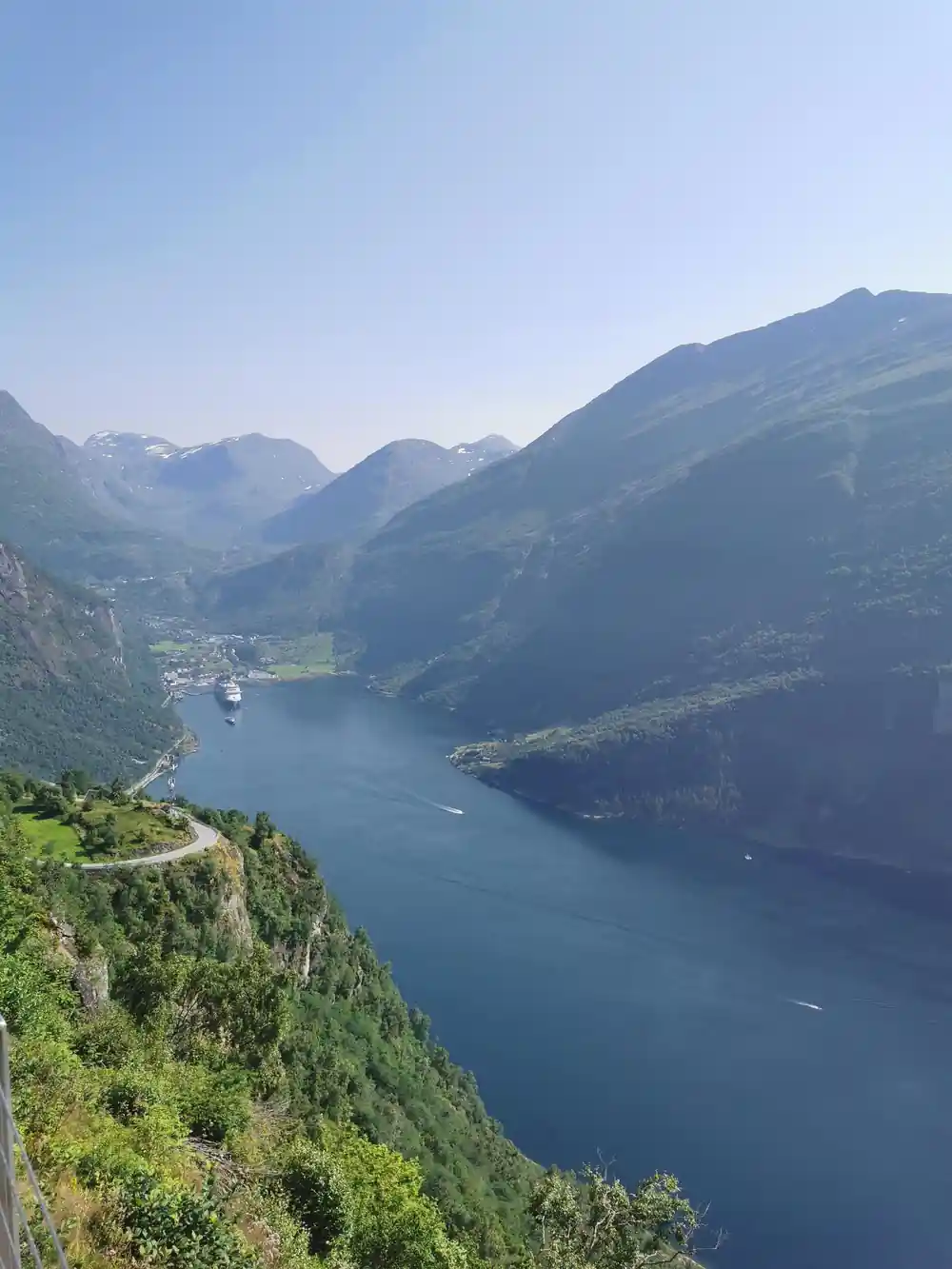
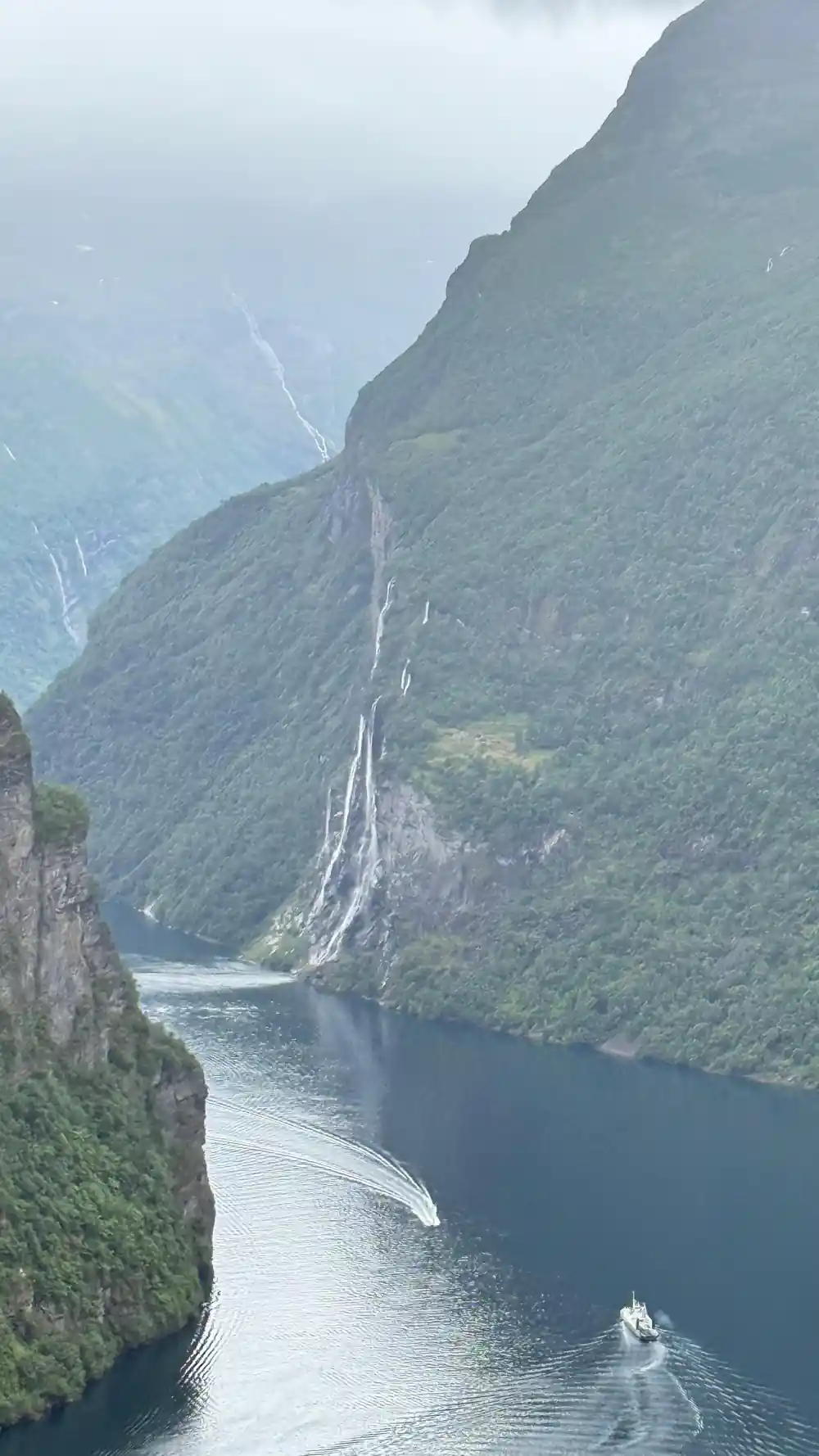
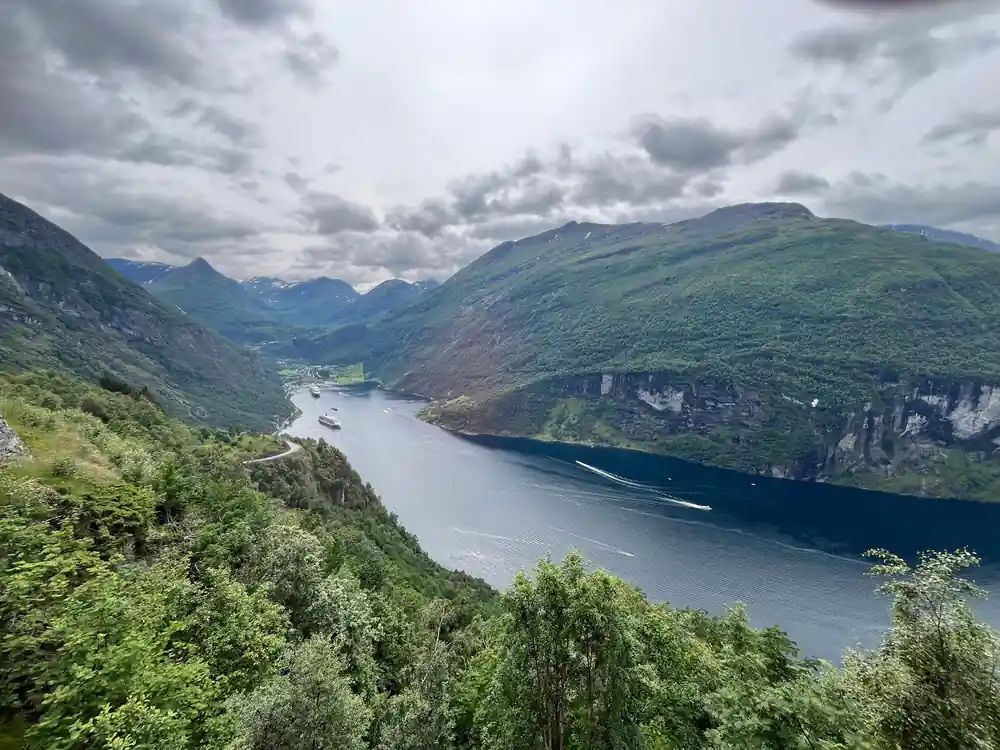
From the water, the abandoned farms of the Geirangerfjord read as scenery: green ledges on a grey wall, impossibly placed, photographed from the deck and left behind. The archive treats them as what they were, which is places where people received post, paid tax, married, and were buried.
A 1904 memoir of the district is plain about the shape of the settlement. Most people lived on the farms Merok, Gjorvad and Grande, it says, but a good many farms also lay high up in the mountains [7]. Two populations, one at the water and one above it, in the same small parish.
The topographic and travel literature is blunt about the economics. In 1889 a description of Norway noted that there is not much arable land in Geiranger, but splendid mountain pasture, and that the inhabitants were said to be well-off people [3]. The wealth, such as it was, walked up the mountain in summer and came down again in autumn.
Geiranger farms history begins with people who had to leave somewhere else
The most striking sentence in the whole set is also the least verifiable, and the magazine that printed it said so. In 1934 the Arbeider-magasinet reported that it was said the first settlers on Tinnbjørgo and farms like it in Sunnylven and Geiranger had been outlaws [15]. Skoggangsmenn: men put outside the law and outside the settlements.
Take it as what it is, a tradition recorded rather than a fact established. But it explains the geography better than any other account. Nobody chooses a ledge four hundred metres above the water with no road to it because it is the best available land. They choose it because it is the land nobody else wants and nobody else visits.
The same magazine, describing one of these places, wrote that this old dwelling place lies wilder than any other in Sunnylven or Geiranger, and that it is not only sheer down to the fjord [15]. That is a writer running out of ways to say how exposed it is.
Brit, who came over the mountain and stayed
One life appears in three separate books, which for this kind of material is unusual and makes it the best documented story on this page.
A 1915 account of the old farming culture of Lom and Skjåk records that Brit became a wife at Merok and never saw her home valley again [9]. The same book adds that she stayed on there afterwards, and that three of her children married into the nearest neighbouring farms [9]. A 1926 volume on Gudbrandsdalen gives her a surname, Brit Hoft, repeats that she never returned to her home valley, and adds that she became a capable and well-liked woman [10]. A 1935 local history mentions Ole Peter Vesteraas, married to a Brit Merok, both of them from Geiranger, a sergeant who bought a piece of land [16].
She came from the Gudbrandsdal side, over the mountain that this tour drives across, and did not go back. Three books written twenty years apart thought that worth recording, which suggests the crossing was understood at both ends as a thing you might do once.
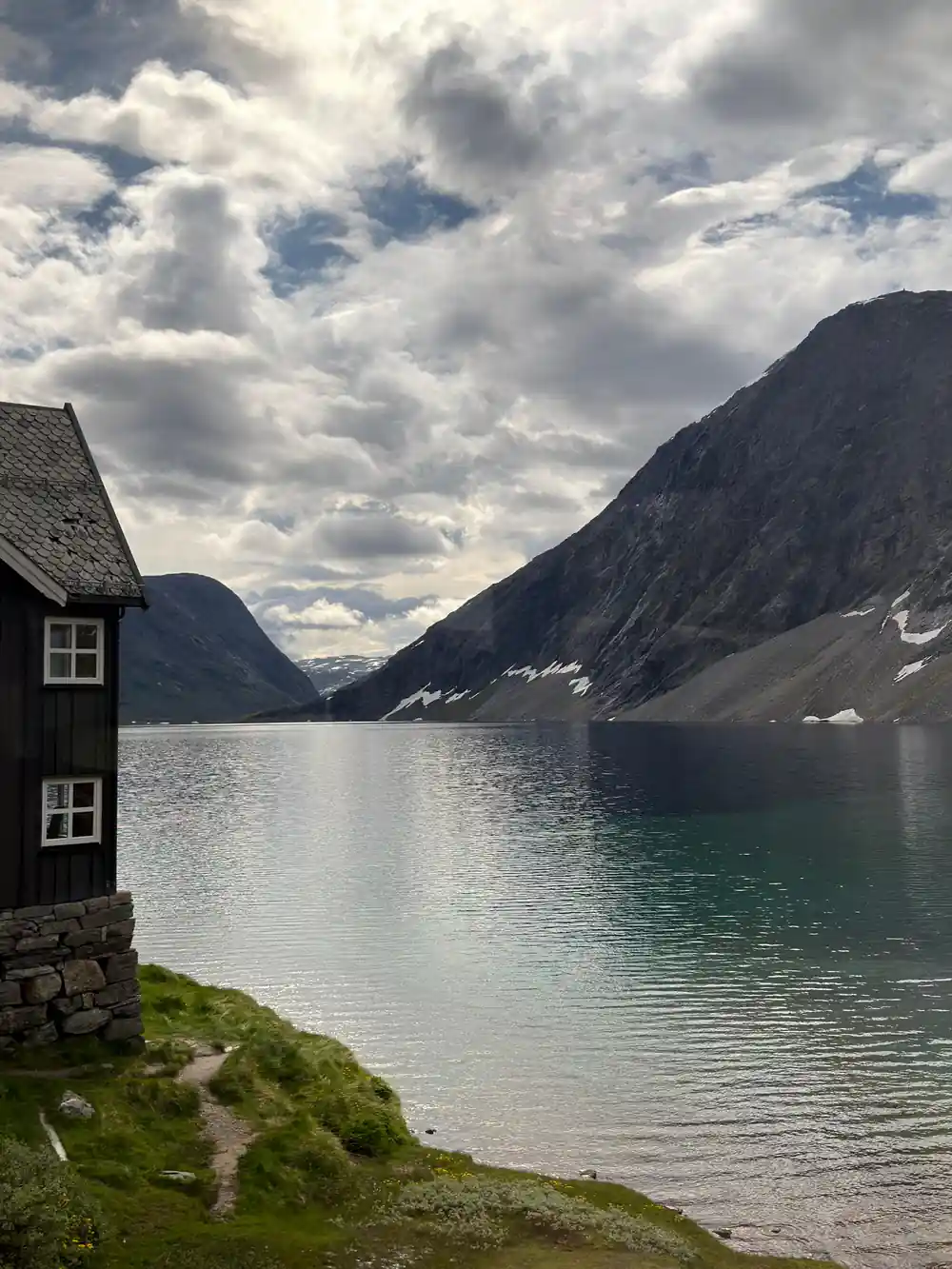
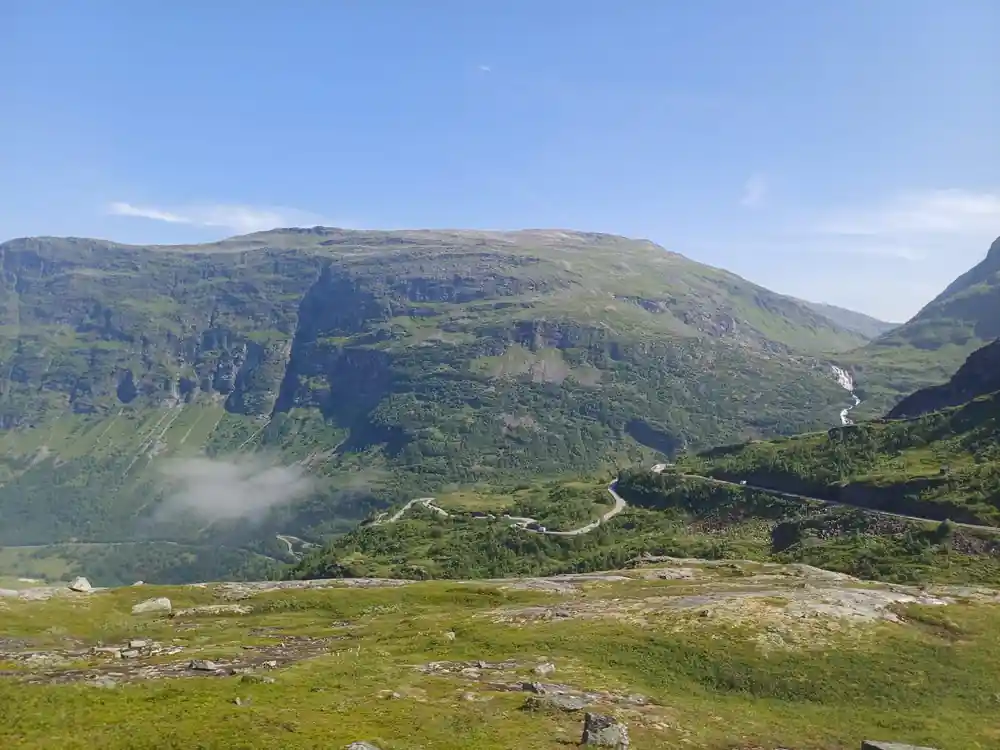
The kind of ledge a 1934 magazine called wilder than any other place in Sunnylven or Geiranger, and which tradition held had been settled by men outside the law.
What it actually cost to live here
The sun is the figure that lands hardest. In 1890 a traveller writing about Norwegian nature and folk life recorded that there is not much sun in Geiranger in winter either, and that at the Merok farm the sun is gone for eighteen weeks [4]. Not dim. Gone, behind the valley wall, for a third of the year.
Fire was the other constant. In December 1883 the Søndmørsposten reported a fire on the Gjørvad farm in Geiranger that burned down five buildings [1]. On a farm reached by a path, a fire is not something a brigade attends.
Not everything was hardship, and the archive is careful about that too. In 1904 a farming paper recorded the finest strawberry crop the writer had ever seen, at a cottar's holding in Merok at the head of the fjord [8]. The same steep, south-facing, sun-trapping ground that makes the valley photogenic also grows fruit unusually well.
The century that ended the farms
The change arrives in the record as administration, which is how change usually arrives. In 1885 the mission magazine noted that the farmers of the Merok and Gjørvad farms had donated a piece of land to the mission [2]. In 1892 the trade register recorded Ingeborg Larsdatter Gausdal, living on the Merok farm, continuing the business of her late husband [5]. Ordinary business, on farms now spoken of as abandoned.
By December 1928 a newspaper could report that only one cottar, living a mile from Merok, still lacked electric power, and that a celebration was being planned [11]. One holdout, and the village counting down to him.
In 1937 a radio magazine noted that Jørgen Gjerding had gathered many curious things about the deserted farms of Sunnylven and Geiranger into a small book [17]. By then the farms were already a subject for a book rather than a place to live, and the boat tours were running past them.
What to look at from the boat
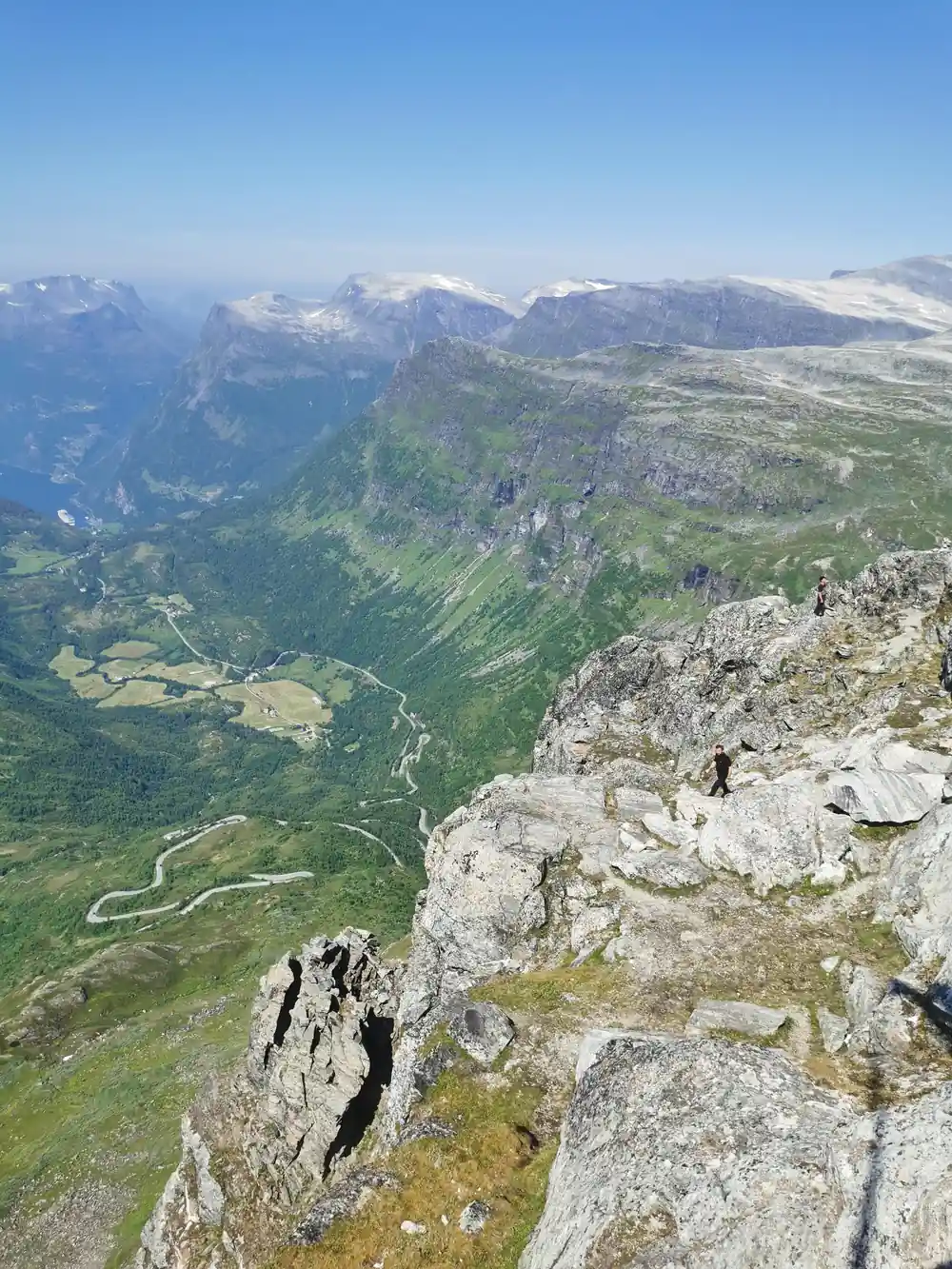
If your itinerary includes the fjord, the ledges are the thing to watch for. A 1933 newspaper account of an outing describes exactly the pattern a visitor still follows: one party went to Storsæterfossen, another up to Djupvasshytta, and a third out to the mountain farm [14].
The waterfalls belong to the farms as much as to the scenery. An 1895 soil survey recorded that Skageflåfossen, by the high-lying Skageflå farm, has the greatest volume of water of the rivers falling into that side of the fjord [6]. A 1930 travel handbook described Tussefossen, whose swirling spray drifts far across the farm's fields [13], which is a sentence about weather on someone's land rather than about a view.
The farms are empty now and most visitors will never learn a single name attached to them. Tinnbjørgo, Gjørvad, Vesterås, Skageflå, and a woman called Brit who came over the mountain and stayed. That is not much to carry, and it is a great deal more than the view alone tells you.
Fifty years of the farms, as the record has them
1883: fire on Gjørvad
Søndmørsposten reports a fire on the Gjørvad farm in Geiranger that burned down five buildings. [1]
1889: little land, good grazing
A description of Norway notes there is not much arable land in Geiranger but splendid mountain pasture, and that the people are said to be well-off. [3]
1890: eighteen weeks without sun
A traveller records that at the Merok farm the sun is gone for eighteen weeks of the year. [4]
1892: a widow keeps the business
The trade register records Ingeborg Larsdatter Gausdal, on the Merok farm, continuing the business of her late husband. [5]
1904: two settlements, one parish
A memoir records that most people lived at Merok, Gjørvad and Grande, but that a good many farms lay high up in the mountains. [7]
1915 to 1935: Brit stays
Three separate books record a woman who came over the mountain, became a wife at Merok, and never saw her home valley again. [9]
1928: the last cottar gets power
Only one cottar, a mile from Merok, is still without electric light, and a celebration is planned. [11]
1934: founded by outlaws
A magazine reports it was said the first settlers on Tinnbjørgo and farms like it had been men outside the law. [15]
1937: the farms become a book
Jørgen Gjerding gathers many curious things about the deserted farms of Sunnylven and Geiranger into a small volume. [17]