At a glance
- The fjord is part of the West Norwegian Fjords, inscribed in 2005 for exceptional natural beauty and its range of landforms.[2]
- Port authorities cap cruise passengers at 6,000 a day in Geiranger and Hellesylt, and 178 cruise ships sailed in during 2022.[3][4]
- The local fjord sightseeing tours run in all weather, and visitors should be prepared for some rainfall during their stay.[6]
- Previous closures of the Langvatnet to Geiranger road came on 18 November and 9 January, with reopenings on 27 April and 17 June.[7]
- The Dalsnibba coach tour booked from this site covers Flydalsjuvet, Dalsnibba, Djupvatnet and Eagle Bend in 3.5 hours.
- Dalsnibba mini bus from US$116 Duration2 hoursWhat you seeDalsnibbaGuideLive, English and NorwegianRating4.30 from 90 reviews See this tour
- Top choice Dalsnibba coach tour from US$116 Duration3.5 hoursWhat you seeFlydalsjuvet, Dalsnibba, Eagle BendGuideLive, EnglishRating4.61 from 2,636 reviews Check availability
- Ålesund boat and bus day from US$210 Duration10.5 hoursWhat you seeHjørundfjord, Geirangerfjord, ØrnesvingenGuideEnglish-speaking hostRating4.60 from 140 reviews See this tour
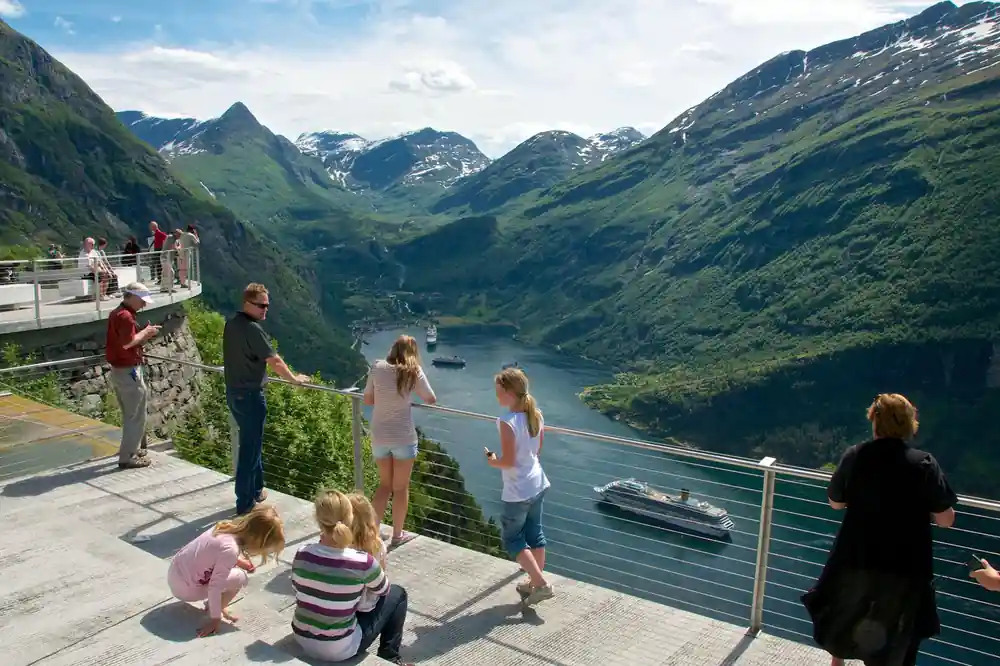
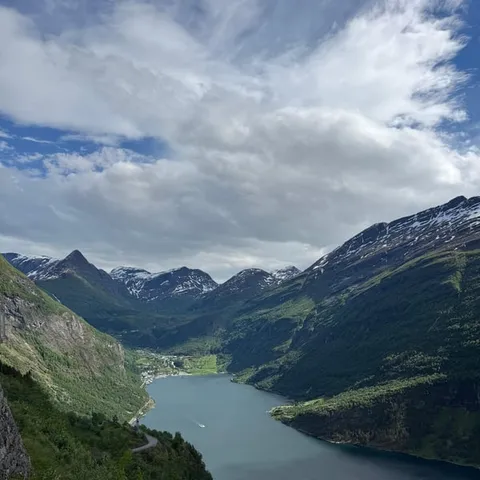
With its natural beauty, it's no surprise that Geirangerfjord often appears on lists of the most spectacular places in the world.
The diverse weather is what gives the region its unique character and visitors should always be prepared for some rainfall during their stay.
Worth the trip, if you plan around its limits
Worth it for
- The Seven Sisters, the Suitor and the Bridal Veil falling into the fjord[1]
- A World Heritage listing since 2005[2]
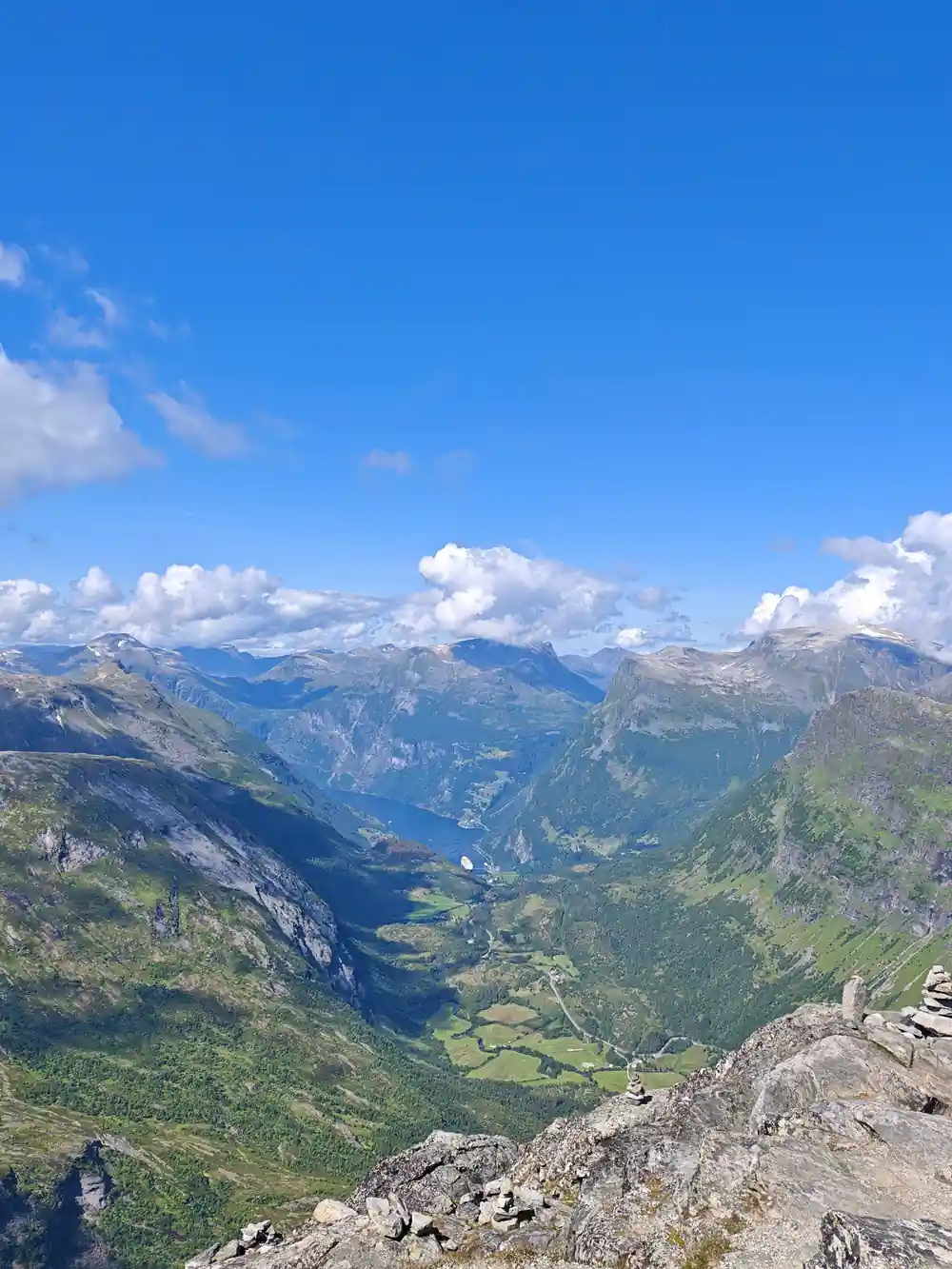
- Views from Flydalsjuvet, Dalsnibba and Eagle Bend
- A secured path beneath Storseterfossen, 45 to 60 minutes each way from Vesterås[11]
Why is Geirangerfjord famous
Its reputation rests on scenery and on a formal listing. Visit Norway notes that the Geirangerfjord often appears on lists of the most spectacular places in the world, and describes a landscape created over a succession of ice ages, when glaciers carved out deep fjords and shaped the high mountains.[1] In 2005 the West Norwegian Fjords, whose two areas are the Geirangerfjord and the Nærøyfjord, were inscribed on the World Heritage List for exceptional natural beauty and a diverse range of landscape formations.[2]
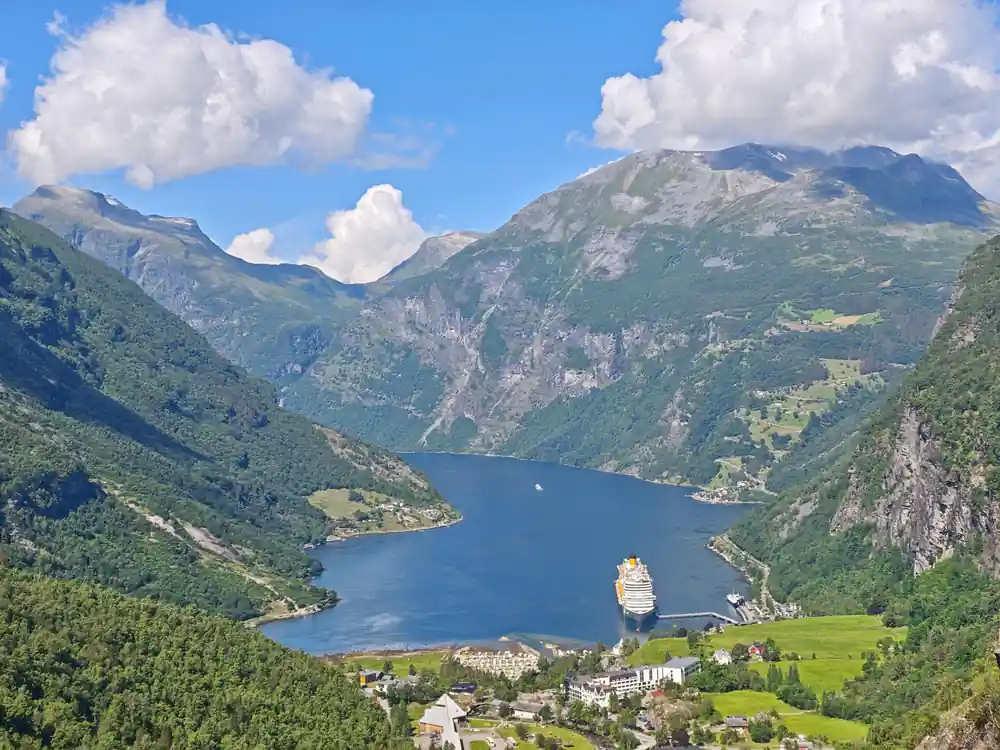
The scale is easy to state. The fjord is 15 kilometres long and 258 metres at its deepest, and the mountains around it rise to between 1,400 and 1,700 metres.[4] A short stretch of water sits inside very high walls.
Then there are the waterfalls. The Seven Sisters, the Suitor and the Bridal Veil all plunge into the fjord, and the highest of the Sisters has a free fall of 250 metres.[1][10] Above the water sits Skageflå, about 250 metres above sea level, the fjord farm where King Harald and Queen Sonja celebrated their silver wedding in 1993.[10][12]
Is Geirangerfjord worth it for a short visit
Yes, provided you pick one way to see it rather than trying to do everything. With only a few hours, the sightseeing cruise from Geiranger runs 75 minutes or two hours, with adult fares from 610 NOK and children at half price.[10] A sightseeing cruise of 75 minutes to two hours can also be booked online from US$68.
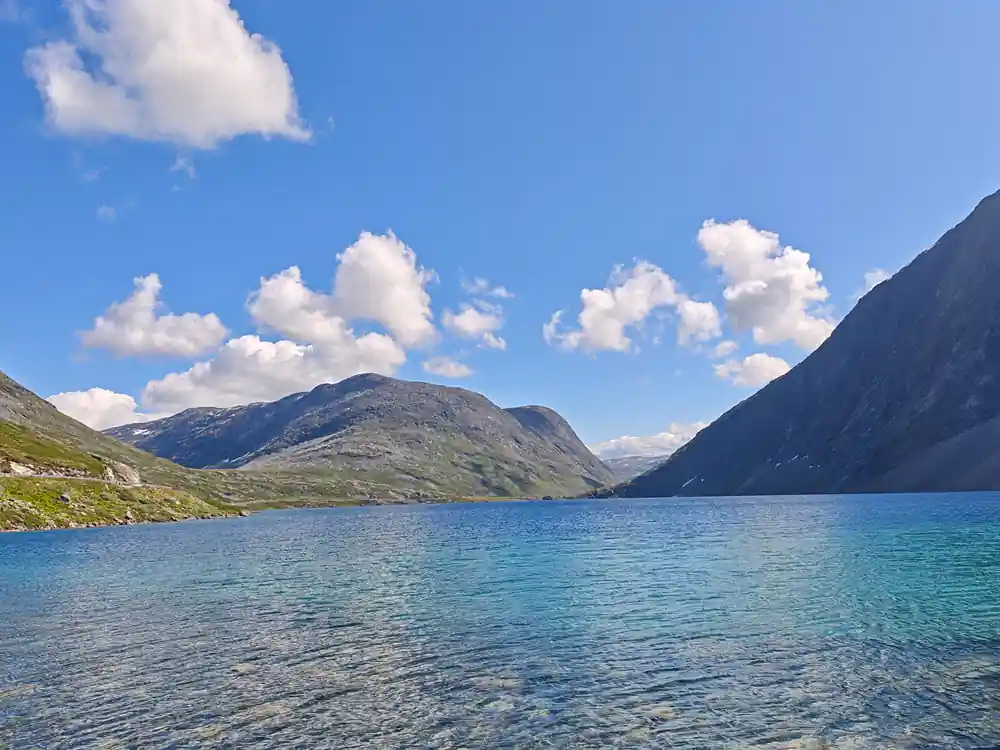
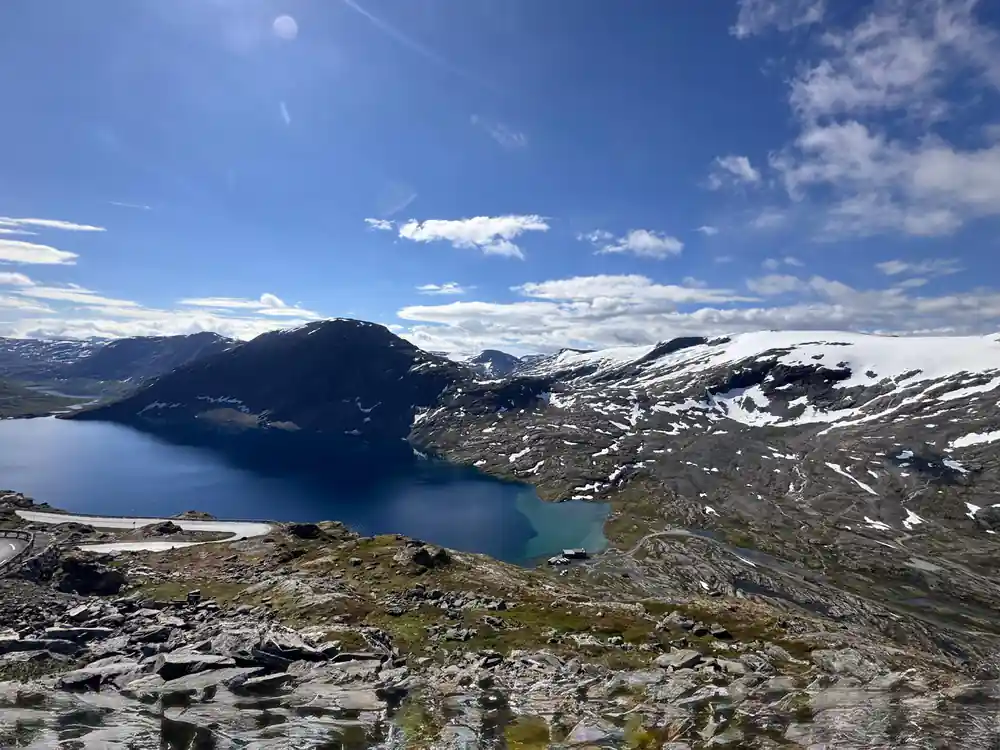
If you would rather see the fjord from above, the Dalsnibba coach tour booked from this site takes 3.5 hours, from US$116, and stops at Flydalsjuvet, Dalsnibba, Djupvatnet and Eagle Bend. Cancellation is free up to 24 hours ahead.
Two shorter options exist. The RIB safari from Geiranger takes one hour from US$95, with a live guide in English, and the Dalsnibba mini bus runs two hours from US$116, with a live guide in English and Norwegian.
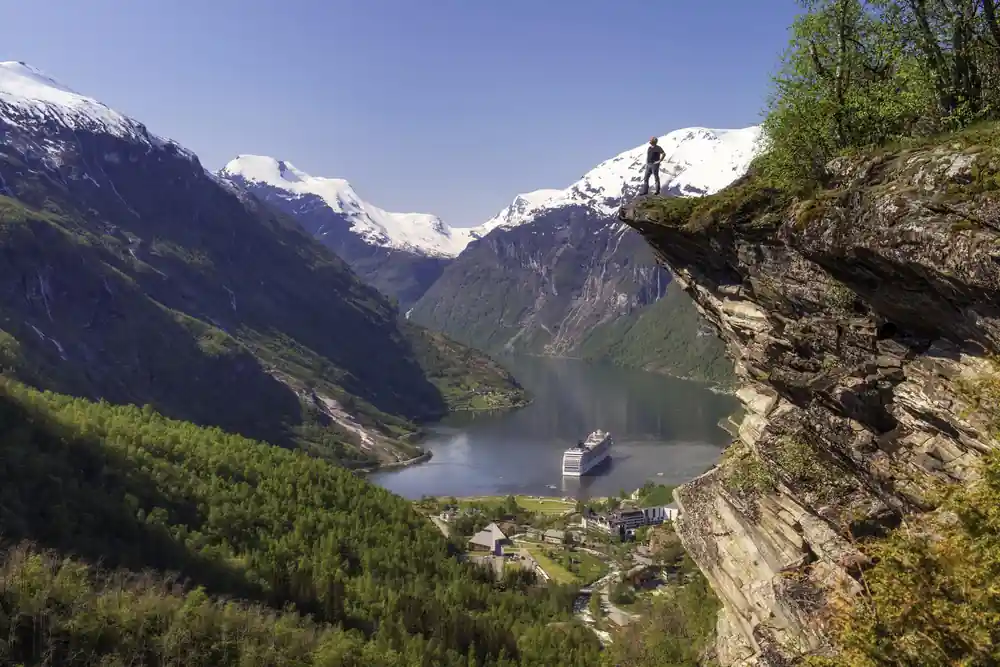
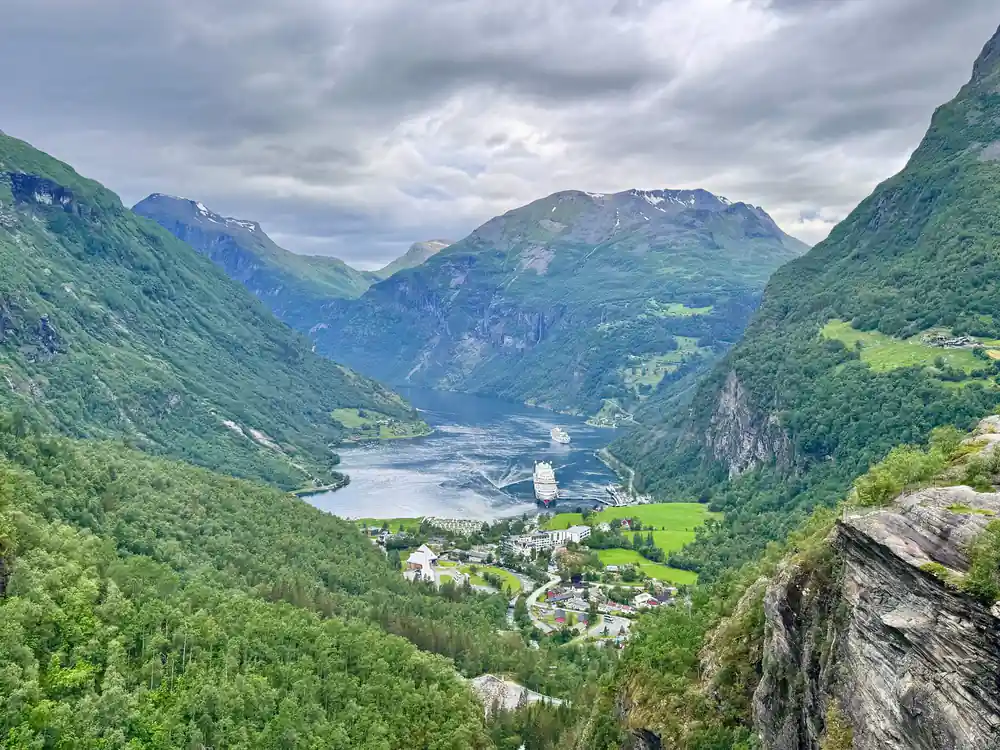
Cruise ships below the steep green walls of the Geirangerfjord
How many days in Geiranger you actually need
One full day is enough to see both levels of the fjord: a sightseeing cruise on the water and the coach tour to the viewpoints, which together take under six hours. If you have time left, the walk from Vesterås to Storseterfossen takes 45 to 60 minutes each way, and a secured path leads beneath the waterfall itself.[11]
Two days let you add a full hike. The guided Skageflå hike takes 5 to 6 hours, is rated demanding, runs from 1 June to 1 September and is sold per group, from NOK 4,500 for one to five people.[12] It starts with a boat transfer and climbs a steep historical path to Skageflå, the best-known fjord farm on the Geirangerfjord.[10][12]
Deciding how long to spend in Geirangerfjord also depends on where you sleep. From Ålesund, a boat trip in with a return bus fills a 10.5-hour day from US$210, and a round trip on a hybrid electric boat takes 8.5 to 9.5 hours from US$202. Both make for a long day.
The downsides: crowds, weather and closed roads
Geiranger is a busy port. In 2018 the fjord received 188 cruise ships, and nearly 250,000 cruise passengers went ashore in Geiranger; in 2022, 178 cruise ships sailed in.[4] Across the World Heritage fjords, visitor numbers went from 200,000 in 2021 to 1 million in 2023, as visitation returned to pre-pandemic levels.[3]
The weather is part of the deal. Fjord sightseeing tours in Geiranger run in all weather conditions, and Visit Geiranger advises that visitors should always be prepared for some rainfall during their stay.[6] Pack a waterproof layer whatever the forecast says.
Winter changes the map. On the road between Langvatnet and Geiranger, previous closures came on 18 November and 9 January, and previous openings on 27 April and 17 June.[7] The Dalsnibba toll road opens only once it is cleared of snow, in the last half of May.[8] Separately, Fjord1 has cancelled the Geiranger to Hellesylt ferry for the rest of the 2026 season.[9]
2019
Geiranger and Hellesylt cap cruise passengers at 6,000 a day, and 328 ships called at the World Heritage fjords in 2019.[3]
Is it too crowded with cruise ships
Cruise traffic has grown. Across the World Heritage fjords, IUCN World Heritage Outlook records 308 cruise ships with 265,585 passengers in 2002, and 328 ships carrying 617,545 passengers in 2019.[3] Local port authorities have set a limit of 6,000 cruise passengers a day in Geiranger and Hellesylt.[3]
Emission rules are tightening too. A zero-emission requirement applies in the World Heritage fjords to passenger ships under 10,000 gross tonnage from 1 January 2026, and to larger passenger ships from 1 January 2032.[5] It covers cruise ships, tourist boats and ferries alike, and shore power is mandatory wherever the facilities exist.[5]
Timing is the practical answer to crowds. The boat company recommends booking ahead in the June to August high season, when some departures sell out.[6] The National Tourist Routes guide notes that traffic on the Geiranger to Trollstigen route is heavy in high season, and suggests early June or September instead.[7]
Geirangerfjord reviews: how travellers rate the tours
The tour sold from this site holds a 4.61 rating from 2,636 GetYourGuide reviews. Its guide scores 4.7, its transportation 4.6 and its value for money 4.4, so value for money is its lowest-scoring category.
On the water, the RIB safari from Geiranger scores 4.81 from 1,203 reviews and the sightseeing cruise 4.33 from 1,405. The day trip from Ålesund with a boat in and a bus back scores 4.60 from 140 reviews, and the Dalsnibba mini bus 4.30 from 90. After the coach tour, the cruise and the RIB have the most reviews of the Geiranger tours on GetYourGuide.
Not everything rates well. The hop-on hop-off bus in Geiranger scores 3.61 from 629 reviews, and the bus tour with a multilingual audio guide 4.03 from 321. Among these listings, the two bus tours that rely on an audio guide rather than a live guide score lowest.
What a visit costs, and the verdict
Geiranger is not a cheap day. The sightseeing cruise starts from US$68, the RIB from US$95, the Dalsnibba coach tour from US$116 and the Ålesund boat and bus day from US$210. A guided Skageflå hike for a group of up to five costs from NOK 4,500.[12] On the Dalsnibba coach tour, value for money is the lowest-scoring category.
For most travellers it is still worth it: a World Heritage listing, a waterfall with a free fall of 250 metres, and a coach tour from Geiranger to the viewpoints at Flydalsjuvet, Dalsnibba and Eagle Bend.[2][10] It is least worth it in winter if Dalsnibba is the reason you came, since the toll road does not open until the last half of May.[8]
The simplest plan: visit between late May and September, book the boat and the coach tour ahead for June to August, and give it one full day, or two if you want to walk to Skageflå.[6][7][8][12]
How long each way of seeing Geiranger takes
Durations from each tour listing; the sightseeing cruise also runs a two-hour version.[10]
Price a day at the Geirangerfjord
Every figure is a "from" price for one adult from each tour's GetYourGuide listing, not a quote. Child prices may differ, so check the listing before you book.
When to plan a Geirangerfjord trip
Planning a Geiranger trip
Check the season
The Dalsnibba road opens in the last half of May, once it is cleared of snow.[8]
Count your hours
A cruise takes 75 minutes or 2 hours, the coach tour 3.5 hours and the guided Skageflå hike 5 to 6 hours.[10][12]
Expect cruise passengers
Geiranger and Hellesylt allow up to 6,000 cruise passengers a day.[3]
Book ahead for summer
Some boat departures sell out in the June to August high season.[6]
Pack for rain
Fjord sightseeing tours sail in all weather, and visitors should be prepared for some rainfall.[6]
See the Geirangerfjord from Dalsnibba in 3.5 hours
from US$117Reserve now & pay later